
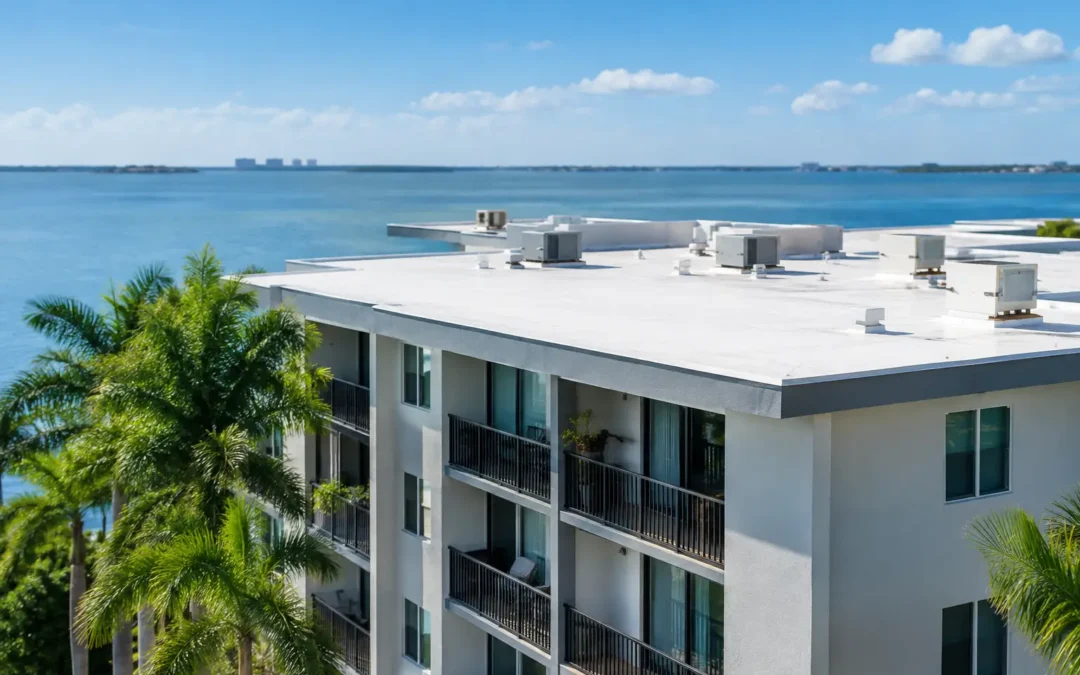
A roof problem at a condominium is rarely just a roof problem. One leak can affect several owners, common areas, insurance requirements, association reserves, and the day-to-day comfort of residents. This condo roofing example shows how a Florida association can move from early warning signs to a well-managed replacement project without treating every stain or missing shingle as an isolated issue.
Consider a 48-unit condominium community in Northeast Florida with three low-rise buildings. The buildings have asphalt shingle roofs that are about 19 years old. After a season of heavy rain and wind, residents report ceiling stains in upper-floor units, and a maintenance walk identifies lifted shingles, granule loss, aging pipe boots, and soft decking near two roof penetrations.
The board’s first question is understandable: can the association repair the affected areas, or is it time to replace every roof? The right answer depends on the condition of the full roofing system, not only the visible leak locations.
What This Condo Roofing Example Reveals
A qualified roofing contractor begins with a complete inspection of each building. That should include the roof covering, flashing, valleys, vents, pipe penetrations, gutters and drainage, attic ventilation where accessible, and the deck beneath damaged areas. For a condominium association, the inspection report should separate urgent repairs from longer-term concerns and identify whether similar failures are appearing across all buildings.
In this example, the contractor finds that the roofs have reached the later stage of their expected service life. Repairs could temporarily address the active leaks, but they would not solve widespread shingle brittleness, deteriorated flashing details, or the growing risk of wind-driven rain entering beneath the roof covering.
That distinction matters. A targeted repair may be the responsible choice when a newer roof has localized storm damage. However, repeatedly repairing an aging roof can consume reserve funds while leaving residents exposed to another leak during the next major storm. A full replacement is a larger investment, but it creates a consistent system with a defined warranty and a clearer maintenance plan.
For this community, the board chooses replacement, phased building by building to manage cash flow and resident disruption. The work begins with the building showing active interior leaks, followed by the two remaining structures on a planned schedule.
Building a Scope That Protects the Entire Property
A condo reroof should never be priced as a simple count of roofing squares. The proposal needs to define the complete system being installed and the conditions that may change the final scope. A clear estimate helps the board compare contractors fairly and explain the investment to owners.
For the hypothetical community, the replacement scope includes removal of the existing shingles, inspection of the roof decking, replacement of deteriorated wood as needed, new underlayment, properly installed flashing, starter shingles, ridge ventilation, boots and flashing at penetrations, and new architectural shingles rated for the local conditions.
The contractor also documents areas that require special attention. These include transitions where roofs meet walls, valleys that carry high volumes of water, rooftop equipment curbs, and any locations where previous repairs created uneven layers or concealed damage. These are often the details that determine whether a roof holds up through Florida’s sun, afternoon downpours, and hurricane-season winds.
Material selection is not only an appearance decision. A community may prefer architectural shingles for their dimensional look and dependable performance, while another property may require tile, metal, or a low-slope commercial roofing system on certain sections. The roof design, slope, building code requirements, budget, and long-term maintenance expectations all shape the right choice.
A contractor should also explain the available manufacturer warranty options and what is required to maintain them. Credentials matter here. A GAF Master Elite® contractor, for example, can offer access to enhanced GAF warranty coverage that may not be available through every installer. The warranty is valuable, but workmanship remains equally important. Materials can only perform as designed when the details beneath and around them are installed correctly.
Planning for concealed damage
No responsible contractor can promise that no hidden decking damage exists before the old roof is removed. The better approach is to establish a process before work starts. The proposal should state the unit price for replacement decking, describe how discoveries will be documented, and identify who at the association has authority to approve necessary changes.
In this example, the contractor photographs each damaged deck section and provides the property manager with daily updates. That gives the board documentation for its records and helps avoid surprises after the work is already underway.
Resident Communication Is Part of the Roofing Work
Condominium roofing projects succeed when residents know what to expect. Roof replacement is noisy, parking may be adjusted, and crews may need access around balconies, attic spaces, or top-floor units if active leaks require interior protection. A board should not have to manage these details alone.
Before the first material delivery, the contractor and property manager create a resident notice with the project sequence, work hours, parking and safety instructions, and a contact process for urgent concerns. Residents are asked to move vehicles away from designated work zones, secure fragile items in attics or on balconies, and report leaks promptly.
For occupied buildings, weather monitoring is essential. Crews should not leave exposed areas vulnerable when rain is likely. If unexpected weather arrives, proper temporary protection and responsive communication make a meaningful difference for residents. In an emergency, professional roof tarping can limit additional damage while permanent repairs or replacement plans are finalized.
Cleanup also deserves attention. A professional crew protects landscaping where practical, uses magnetic sweeps for nails, keeps common walkways safe, and performs a final property walkthrough. For an association, these details reflect both the contractor’s workmanship standards and the board’s responsibility to owners.
Financial Decisions: Repairs, Reserves, and Timing
The financial side of a condo roof replacement can be difficult because every association has different reserve levels, insurance policies, governing documents, and owner approval requirements. Still, delaying a necessary roof project often has costs beyond the proposal total. Water intrusion can damage insulation, drywall, flooring, electrical systems, and personal property. It can also lead to disputes about responsibility between the association and individual unit owners.
In this example, the board uses its reserve study as a starting point, reviews financing options for the portion not immediately covered by reserves, and obtains a detailed project proposal before setting an assessment strategy. The board also confirms whether any recent storm damage should be reviewed under its insurance policy. Roofing contractors can provide damage documentation, but coverage decisions remain with the carrier and policy terms.
The lowest bid is not automatically the lowest long-term cost. A proposal that omits flashing replacement, underlayment details, ventilation, site protection, permit coordination, or warranty information may look attractive until change orders and preventable repairs begin. The board should compare scope, installation standards, credentials, manufacturer backing, project supervision, and responsiveness alongside price.
Questions a Condo Board Should Ask Before Signing
A thoughtful conversation can reveal whether a contractor is prepared for the realities of multifamily work. Ask who will supervise the project daily, how residents will receive updates, what happens if hidden damage is found, and how the contractor will protect the property during rain.
The board should also ask whether the proposed system meets applicable Florida code requirements, what permits are needed, how warranty registration is handled, and what maintenance steps the association should plan after installation. For properties with several roof types, ask whether one contractor has the capability to manage both shingle and low-slope sections without creating gaps in responsibility.
Stonebridge approaches these decisions with clear estimates, trained roofing professionals, and a focus on systems built for Florida conditions. For an association, accountability before, during, and after the installation is as important as the shingles selected.
A condominium roof is a shared asset, which means the best time to make a plan is before leaks become an emergency. A documented inspection, a clearly defined scope, and direct communication give boards and owners a steadier path forward when Florida weather puts the property to the test.