
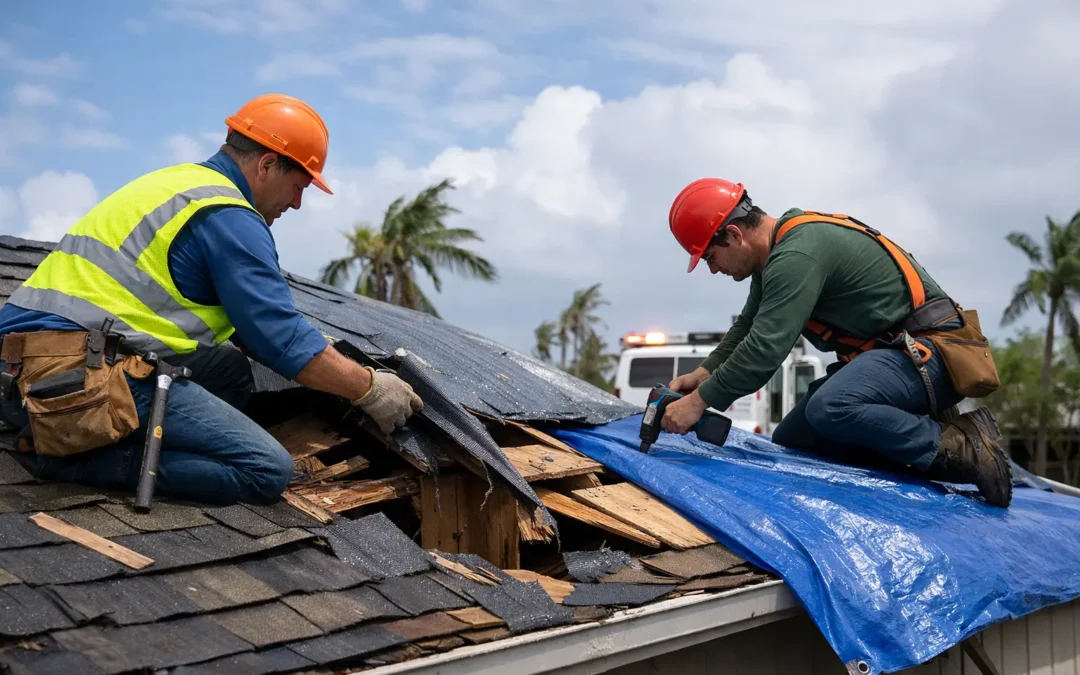
Emergency Roof Repair After Hurricane Damage
A hurricane can leave a roof looking intact from the driveway while water is already moving beneath lifted shingles, cracked tiles, damaged flashing, or displaced underlayment. Emergency roof repair after hurricane damage is about stopping that exposure quickly and safely, then making informed decisions about the permanent work ahead. For Jacksonville and Northeast Florida property owners, the first hours after a storm can make a meaningful difference in preventing interior damage, mold growth, and a much larger repair bill.
Put Safety Before the Roof
Do not climb onto a hurricane-damaged roof. Wet surfaces, hidden soft spots, downed power lines, and loose materials make even a one-story roof dangerous. If your home has active water intrusion, move valuables away from the leak, place buckets under drips where it is safe to do so, and shut off electricity to the affected area if water is near outlets, fixtures, or the electrical panel.
Start your inspection from the ground. Look for missing shingles, scattered tile, bent or detached gutters, exposed roof decking, damaged vents, and tree limbs resting on the structure. Inside, check ceilings, attic spaces, and upper walls for water stains, sagging drywall, damp insulation, or a musty odor. A roof leak may appear several feet away from the actual opening because water can travel along rafters and decking before it becomes visible indoors.
If a tree has penetrated the roof, a section of roof has collapsed, or structural movement is visible, keep people out of that part of the property. Contact emergency services when there is an immediate hazard, then arrange for a qualified roofing professional to assess the damage.
Document Damage Before Temporary Repairs
Once conditions are safe, take clear photos and video from the ground and throughout the interior. Capture wide shots of each roof slope you can see, along with close-ups of debris, missing materials, ceiling stains, and damaged belongings. Include photos of the exterior elevations, gutters, screens, siding, and windows. Hurricane damage is not always limited to the roof.
Make a dated list of what you observe, including when the leak began and which rooms are affected. Keep receipts for reasonable emergency expenses, such as water mitigation, tarping, or temporary boarding. This documentation supports an insurance claim and gives your contractor a better starting point when conditions allow for a full inspection.
It is wise to notify your insurance carrier promptly, but do not wait for an adjuster before taking reasonable steps to prevent additional damage. Most policies expect property owners to mitigate further loss. A professionally installed emergency tarp can be a critical part of that effort.
What a Professional Roof Tarp Should Do
A tarp is not a permanent repair, and it should never be treated as one. Its purpose is to create a temporary water-shedding barrier until the roof can be inspected, approved, and repaired correctly. Proper tarping requires more than stretching a plastic sheet over a leak.
A roofing crew should identify the damaged area, extend the tarp beyond the opening, secure it to withstand wind and rain, and avoid creating unnecessary punctures in sound roofing materials. The crew should also evaluate whether water has entered the attic or wall system. A roof may need more than a tarp if the decking, framing, or flashing has been compromised.
DIY tarping can be tempting when contractors are in high demand after a hurricane. The trade-off is significant: an improperly secured tarp can tear loose, direct water into another vulnerable area, or expose the homeowner to a serious fall. Professional emergency service is generally the safer choice, particularly when damage is high on the roof or conditions remain wet and windy.
What Happens During an Emergency Roof Inspection
After the immediate opening is protected, a thorough inspection determines whether the roof can be repaired or whether hurricane damage has affected the larger system. That distinction matters. Replacing a few missing shingles may solve a localized problem, but it will not correct widespread wind damage, saturated decking, or compromised underlayment.
A qualified inspector should assess shingles or tiles, ridge caps, flashing around chimneys and walls, roof penetrations, vents, valleys, gutters, decking, and the attic beneath the affected area. On commercial properties, the review may also include membrane seams, drains, curbs, edge metal, and rooftop equipment penetrations.
Florida roofs can sustain wind damage that is not immediately obvious. Shingles may be creased, loosened, or partially unsealed without blowing completely off. Tile may crack at fastener points. Flashing can lift just enough to allow wind-driven rain inside. These conditions deserve a professional assessment before they become recurring leaks during the next heavy storm.
Repair or Replacement: How to Make the Right Call
The right solution depends on the roof’s age, material, condition before the storm, and the extent of damage. A newer roof with a limited damaged section may be a strong candidate for targeted repair. When matching materials are available and the surrounding roof remains sound, a repair can restore protection without the cost of a full replacement.
Replacement may be the more responsible option when damage is widespread, the roof is near the end of its service life, leaks have occurred in multiple areas, or underlying materials have deteriorated. A patchwork approach can cost less today but create repeated repair visits, inconsistent performance, and uncertainty during the next hurricane season.
Ask for a clear explanation of the recommended scope. A dependable contractor should show you the damaged areas, explain what can be repaired, identify any conditions that warrant replacement, and provide a written estimate. The lowest quote is not always the lowest long-term cost, especially if it excludes proper underlayment, flashing, ventilation, cleanup, or warranty coverage.
Be Careful With Post-Storm Contractor Decisions
After a hurricane, homeowners often encounter unfamiliar contractors going door to door or offering immediate repairs with little documentation. Urgency is real after storm damage, but it should not force a rushed contract decision.
Before authorizing permanent work, verify that the contractor is properly licensed and insured, has a local operating presence, and can provide a detailed written scope. Ask who will perform the work, what materials will be used, how the property will be protected during repairs, and what workmanship and manufacturer warranty options apply. Avoid signing documents you do not understand or paying the full project amount upfront.
Local experience matters because Northeast Florida roofs face more than a single storm event. They must hold up against intense sun, humid conditions, heavy rain, salt air in coastal areas, and repeated wind exposure. Stonebridge brings GAF Master Elite® credentials, professional-grade materials, and Florida-focused workmanship to emergency assessments and long-term roof solutions.
Protect the Interior While the Roof Is Being Addressed
Even after a tarp is installed, keep monitoring the interior. Run fans and dehumidifiers in affected spaces when safe to do so, and remove wet rugs, insulation, or furnishings promptly. Drying is time-sensitive. Moisture trapped in drywall, insulation, and framing can lead to mold and deterioration long after the visible leak stops.
Do not paint over water stains or close up wet building materials before the source of moisture has been corrected and the area has dried. If water has affected a large area, professional mitigation may be necessary. Your roofing contractor and water restoration provider should have a clear understanding of where the roof damage occurred and what materials were exposed.
Plan for a Stronger Roof After the Emergency
A hurricane repair is also an opportunity to address vulnerabilities that existed before the storm. Better flashing details, upgraded underlayment, properly installed ventilation, secure edge protection, and compatible roofing materials can improve long-term performance. If a replacement is needed, homeowners may also consider whether an integrated solar roofing option fits their energy goals and the new roof system.
The best time to think about resilience is not when skies are clear and the damage is forgotten. Keep records of your roof’s age, maintenance history, warranty information, and prior repairs. Schedule preventative inspections before hurricane season, clear debris from roof valleys and gutters, and address small leaks before wind-driven rain turns them into an emergency.
When a hurricane damages your roof, the immediate goal is simple: protect people, stop water from entering, document what happened, and get a qualified local professional involved. A calm, well-documented response gives your property the best chance to recover well and be ready for the weather Florida will bring next.