
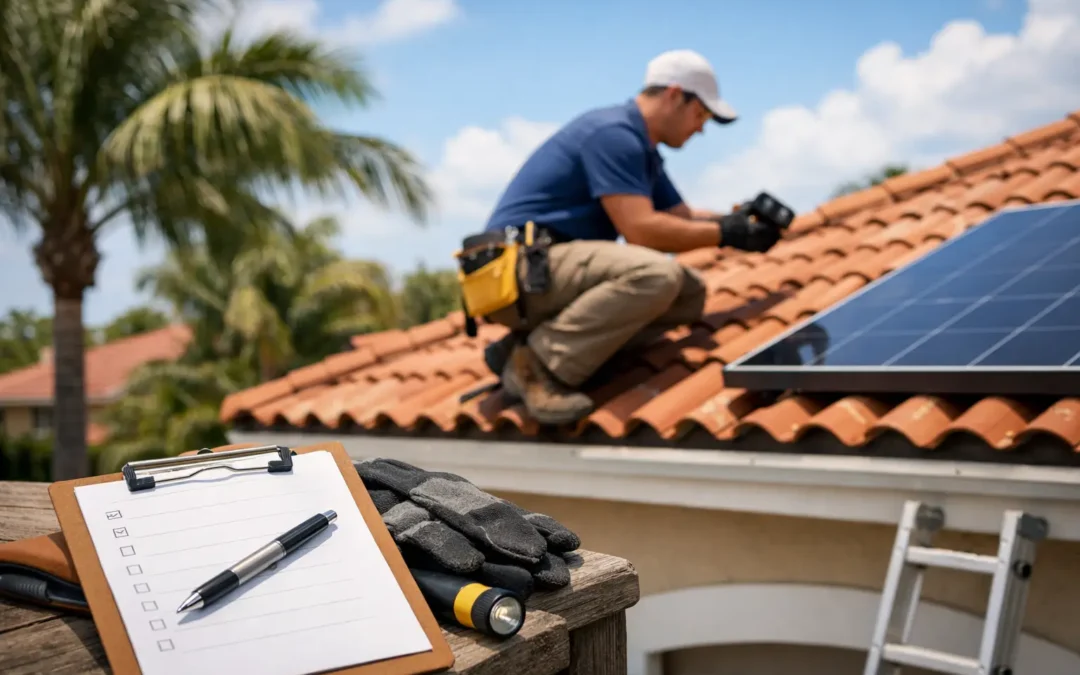
A Florida roof does not get an off-season. Jacksonville-area homes face intense UV exposure, heavy summer rain, humidity, salt air near the coast, falling branches, and the possibility of tropical storms. A practical Florida roof maintenance checklist helps you catch small warning signs before water reaches the decking, insulation, ceilings, or electrical systems below.
Roof maintenance is not about climbing onto the roof after every rainstorm. For most homeowners, it means knowing what to look for from the ground, keeping drainage paths clear, documenting changes, and bringing in a qualified roofing professional when a concern deserves a closer look. The right timing matters just as much as the task.
Florida Roof Maintenance Checklist: Start With a Safe Visual Review
Walk around your property a few times each year, especially after a major storm. Use binoculars if needed and stay off a wet, steep, brittle, or visibly damaged roof. Florida heat can soften asphalt shingles, while tile and metal systems can be slippery even when they appear dry.
From the ground, look for changes rather than trying to diagnose every detail. A roof that looked uniform last season but now has a dark patch, a lifted shingle edge, a missing tile, or debris trapped in a valley needs attention. The same is true if gutters are sagging, rooflines appear uneven, or flashing around chimneys, vents, skylights, and wall transitions looks loose.
Inside, check ceilings, attic spaces, upper walls, and closets after prolonged rain. Water stains, peeling paint, damp insulation, musty odors, or a sudden increase in humidity can point to a roof leak. Keep in mind that the visible stain is not always directly beneath the opening. Water can travel along decking, framing, wiring, or insulation before it appears indoors.
The Essential Homeowner Checklist
A simple maintenance routine should focus on the parts of the roofing system that manage water and resist wind. During each review, check these areas:
- Roof surface: Look for cracked, curled, loose, missing, blistered, or displaced shingles; broken, slipping, or chipped tiles; lifted metal panels; and exposed fasteners.
- Flashing and penetrations: Inspect the areas around plumbing vents, exhaust vents, skylights, chimneys, solar equipment, and roof-to-wall transitions for gaps, rust, loose sealant, or separated materials.
- Gutters and downspouts: Remove leaves, pine needles, seed pods, and roof granules that prevent water from moving away from the home. Confirm downspouts discharge away from the foundation.
- Valleys and drainage paths: Clear branches and accumulated debris. Valleys handle concentrated water flow and are common locations for leaks when debris holds moisture in place.
- Attic conditions: Watch for moisture, mold-like growth, wet insulation, daylight through the roof deck, or ventilation concerns. Proper attic ventilation supports roof performance in Florida’s heat and humidity.
- Nearby trees: Trim limbs that rub against the roof or could fall during high winds. Avoid aggressive pruning that harms the tree, but do not let branches scrape roofing materials day after day.
For tile, metal, flat, and low-slope roofs, the details differ, but the goal remains the same: preserve the system’s ability to shed water and withstand wind. Avoid using pressure washers or harsh chemicals on roofing materials unless the manufacturer and a qualified contractor specifically recommend that method. An improper cleaning can remove protective granules, damage coatings, break tiles, or force water beneath the surface.
Schedule Maintenance Around Florida Weather
Florida’s weather pattern makes seasonal timing useful. A roof inspection before hurricane season gives you time to address loose materials, failing flashings, blocked gutters, and vulnerable tree limbs before the strongest storms arrive. For Northeast Florida properties, late winter through spring is often a practical planning window.
After a tropical storm, hurricane, or severe thunderstorm, inspect from the ground as soon as it is safe. Do not assume there is no damage simply because water is not dripping through the ceiling. Wind can break seals, lift shingles, crack tiles, loosen ridge materials, and drive rain into small openings that take weeks to reveal themselves.
Summer calls for extra attention to drainage. Afternoon downpours can overwhelm clogged gutters and expose weak points around valleys, scuppers, and low-slope sections. If water repeatedly overshoots gutters or ponds on a flat roof for more than a short time after rainfall, schedule a professional evaluation.
Fall is a good time to remove leaf buildup and inspect for damage that may have developed through the wet season. In winter, Florida homeowners should remain alert for condensation and ventilation issues, particularly in attics. Cooler nights and indoor temperature differences can make existing moisture problems more noticeable.
Know the Difference Between Maintenance and Repair
Maintenance protects a roof that is still fundamentally sound. It may include cleaning drainage components, removing debris, replacing small amounts of damaged material, resealing appropriate flashing details, and documenting the roof’s condition over time.
Repair is needed when there is an active leak, storm damage, missing or broken materials, deteriorated flashing, wind uplift, punctures, or a localized failure around a roof penetration. A prompt repair can often prevent a small opening from becoming deck rot, interior damage, or mold remediation work.
Replacement becomes the more responsible option when repairs are becoming frequent, the roof is near the end of its service life, damage is widespread, or the system no longer provides reliable wind and water protection. Age alone does not dictate replacement. Material type, installation quality, past repairs, ventilation, storm exposure, and the condition of the decking all matter.
This is where a professional assessment helps. A trustworthy contractor should explain what is damaged, what can reasonably be repaired, and where a repair may only be a temporary measure. Homeowners deserve clear options, not pressure to replace a roof that still has useful life.
Do Not Ignore These Florida Roof Warning Signs
Some signs should move a roof inspection higher on your priority list. Call for professional help if you see a new ceiling stain, active dripping, missing shingles or tiles, exposed underlayment, a tarp left from a prior storm, loose flashing, sagging roof areas, or granules collecting heavily in gutters.
Pay close attention to roofs with solar components as well. Solar roofing and rooftop equipment add penetrations, attachment points, and wiring pathways that must work in coordination with the roofing system. Maintenance should account for both systems without disturbing the manufacturer’s installation requirements. If you are considering solar as part of a reroof, integrating the project from the beginning can reduce future disruption and help protect warranty coverage.
Commercial property owners should also watch for ponding water, membrane seams that appear separated, damaged coping, clogged drains, and interior leaks around rooftop units. Flat and low-slope roofs require a different inspection approach than steep-slope residential roofs, but delayed maintenance carries the same risk: water can spread far beyond the visible entry point.
What a Professional Roof Inspection Should Cover
A professional inspection goes beyond a ground-level review. The contractor can examine material condition, fasteners, flashings, ridge and hip areas, valleys, penetrations, drainage components, ventilation, roof deck concerns, and signs of wind or water intrusion. They can also identify whether previous repairs were completed correctly and whether repairs may affect existing manufacturer warranty requirements.
For homeowners in Jacksonville, Lakeland, and surrounding Florida communities, local experience matters. A roofing system needs to be selected, installed, and maintained for heat, humidity, wind-driven rain, and storm exposure, not simply for a generic climate profile. Stonebridge brings GAF Master Elite® credentials and Florida-focused roofing experience to inspections, repairs, replacements, and integrated solar roofing decisions.
Keep photos, inspection notes, invoices, and storm-damage documentation in one place. This record can help you track recurring concerns, support insurance conversations when appropriate, and make more informed decisions as the roof ages.
A well-maintained roof rarely asks for attention at a convenient time. Giving it a few deliberate checks each year, and responding quickly when something changes, is one of the most practical ways to protect the home and the people beneath it.