
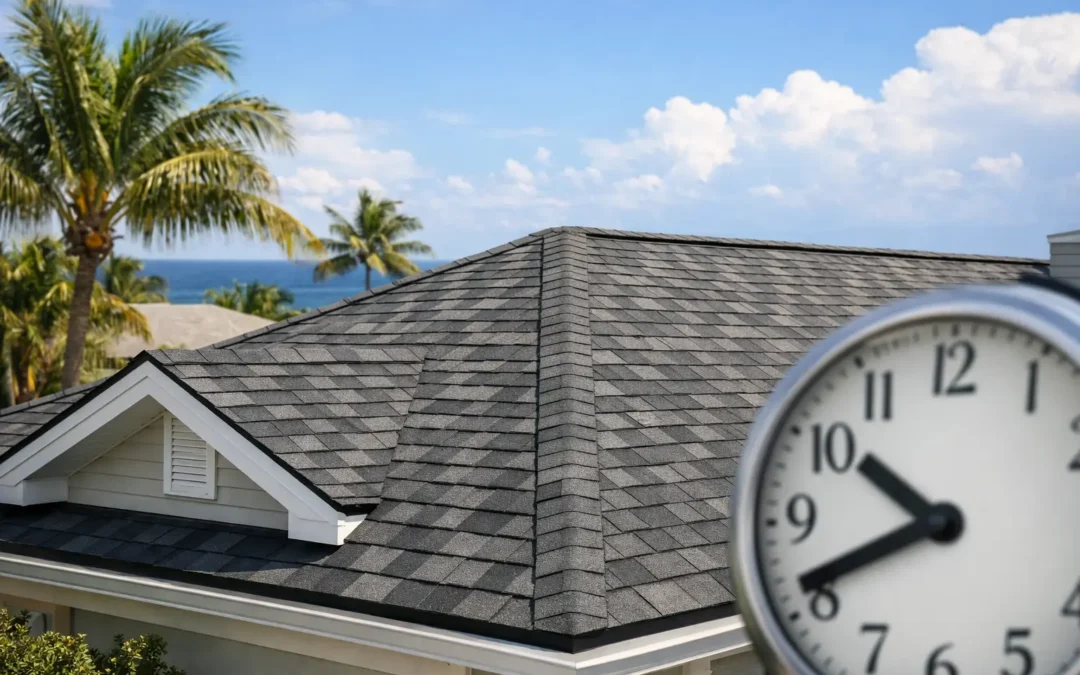
A roof that might perform well for 25 or 30 years in a mild climate can age much faster under Florida sun, humidity, heavy rain, and hurricane-force winds. So, how long does a Florida roof last? For many homes, the realistic answer is 15 to 25 years, but the material, installation quality, storm history, ventilation, and maintenance all matter.
For Jacksonville and Northeast Florida property owners, roof age is only part of the picture. A 12-year-old roof with lifted shingles, active leaks, or storm damage may need prompt attention. On the other hand, a well-installed roof that has been maintained and has no damage may still have useful life remaining beyond the typical range.
How Long Does a Florida Roof Last by Material?
Roofing materials do not respond to Florida weather in the same way. The right choice depends on your home’s design, budget, wind exposure, insurance considerations, and how long you plan to own the property.
Asphalt shingle roofs: about 15 to 25 years
Architectural asphalt shingles are the most common residential roofing choice in Florida. They offer strong curb appeal, dependable protection, and a practical price point. Under constant ultraviolet exposure and high humidity, however, shingles can lose granules, become brittle, curl at the edges, or develop sealant failure sooner than they would in cooler regions.
A quality architectural shingle roof installed to current code and manufacturer specifications may provide 20 years or more of service. Lower-grade three-tab shingles often have a shorter practical lifespan, commonly around 10 to 15 years in Florida conditions. Wind damage, poor attic ventilation, and deferred repairs can shorten either timeline.
Metal roofs: about 30 to 50 years
Metal roofing is a long-term investment for Florida homes and commercial properties. It is valued for its durability, wind performance, resistance to rot, and ability to reflect a portion of the sun’s heat. Properly installed standing-seam or metal-panel systems can often outlast asphalt shingles by decades.
That said, metal is not maintenance-free. Fasteners, flashing, sealants, and penetrations still need periodic inspection. Coastal homes also need materials and installation details suited to salt-air exposure. A metal roof’s longevity depends as much on professional workmanship as on the panel itself.
Tile roofs: 40 years or more, with important conditions
Concrete and clay tile roofs can last for several decades and are a familiar sight across Florida. The tile itself may remain serviceable for 40 to 50 years or longer, but the underlayment beneath it typically has a shorter life. That means an older tile roof may need underlayment replacement even when many of the original tiles still look sound.
Individual cracked, slipped, or missing tiles should be addressed quickly. Walking on tile without the right experience can cause more breakage, so this is a roof system best evaluated and repaired by trained professionals.
Low-slope and flat roofs: about 15 to 25 years
Many commercial buildings, additions, and modern homes use low-slope roof systems. Their lifespan varies by system type, drainage design, exposure, and maintenance. Ponding water, clogged drains, deteriorated seams, and damaged flashing are common threats in Florida’s frequent rainstorms.
These roofs benefit from routine maintenance rather than a wait-for-a-leak approach. Small membrane or flashing issues can become major interior damage after a single hard storm.
Why Florida Roofs Age Faster
Florida roofs work year-round. Intense sunlight heats roofing materials daily, then afternoon downpours cool them quickly. That repeated expansion and contraction can wear down shingles, seals, and flashing over time.
Humidity adds another layer of stress. Moisture can encourage algae growth, affect decking when leaks go unnoticed, and make attic ventilation especially important. A roof also must manage wind-driven rain, which can push water beneath compromised shingles, loose flashing, or damaged ridge components.
Hurricanes and tropical storms create the most obvious risk. Even if a storm does not remove shingles or tiles, strong gusts can weaken seals, lift edges, loosen fasteners, and create small openings that later become leaks. After a named storm or a severe local wind event, a professional inspection can identify damage before it spreads.
Roof Age Is Not the Same as Remaining Life
Homeowners often ask whether their roof needs replacement simply because it is 15 or 20 years old. Age is a useful planning signal, but it is not a diagnosis. The condition of the system matters more.
A roof may still be repairable when the damage is isolated, the decking is sound, and the surrounding materials remain in good condition. A targeted repair can make sense after a minor flashing failure, a few wind-damaged shingles, or a localized leak with a clear source.
Replacement becomes the wiser choice when repairs are recurring, shingle deterioration is widespread, multiple leaks have developed, or storm damage affects large sections of the roof. It can also be appropriate when the roof is nearing the end of its expected service life and you want stronger warranty coverage, improved wind resistance, or a new look before selling your home.
Signs Your Florida Roof Needs a Professional Inspection
You do not need to wait until water reaches the ceiling to have your roof checked. A visual review from the ground can reveal warning signs, but a qualified roofer can assess areas that are difficult or unsafe to inspect yourself.
Schedule an inspection if you notice any of the following:
- Missing, cracked, curled, or buckled shingles
- Dark patches, granules collecting in gutters, or exposed nail heads
- Loose flashing around chimneys, vents, skylights, or wall transitions
- Water stains on ceilings, damp attic insulation, or a musty attic smell
- Cracked or displaced tile, rusting metal components, or loose ridge caps
- A roof approaching 15 years old after repeated severe-weather seasons
The goal is not to replace a roof prematurely. It is to understand its condition, document any storm-related concerns, and make an informed decision before a manageable repair turns into a larger restoration project.
Installation Quality Has a Major Effect on Lifespan
Even the best roofing product cannot perform as intended if it is installed incorrectly. Proper deck preparation, underlayment, flashing, ventilation, fastener placement, shingle alignment, and ridge details all influence how a roof handles Florida’s weather.
Manufacturer-backed systems are designed to work as a complete assembly, not as a collection of unrelated parts. That is one reason credentials matter. A contractor with established manufacturer training and enhanced warranty access is better positioned to follow the installation requirements that protect both your home and your coverage.
Stonebridge brings GAF Master Elite® credentials, a designation held by fewer than 2% of roofing contractors nationwide, to roofing projects across Florida. For a homeowner, that means a higher standard of training, workmanship accountability, and access to stronger manufacturer warranty options on qualifying systems.
How to Help Your Roof Last Longer in Florida
You cannot control the weather, but consistent attention can protect your roof’s remaining life. Keep gutters and roof valleys clear so rainwater can drain properly. Trim branches that rub against the roof or could fall during high winds. Address leaks, loose materials, and damaged flashing promptly rather than treating them as cosmetic issues.
Attic ventilation also deserves attention. Excess heat and moisture trapped beneath the roof can accelerate material aging and contribute to higher cooling costs. During an inspection, ask whether your intake and exhaust ventilation appear balanced for your home’s design.
Finally, have the roof inspected after major storms and at regular intervals as it ages. Documentation from professional inspections and repairs can be valuable for your maintenance planning, insurance conversations, and future home sale.
Planning Before a Roof Fails
The best time to make a roofing decision is before an active leak forces one. If your roof is entering its later years, an honest condition assessment gives you room to compare materials, consider financing, evaluate warranty options, and plan the work around your household or business operations.
For some property owners, a reroof is also the right time to consider integrated energy improvements such as GAF Timberline Solar™ shingles. Combining roofing and solar planning can reduce duplicate work and help ensure the roof system and energy upgrade are designed to perform together.
A Florida roof is more than a layer of shingles, tile, or metal. It is the system standing between your property and the next long summer, heavy downpour, or storm season. A clear assessment now can help you protect your most valuable asset with confidence.