
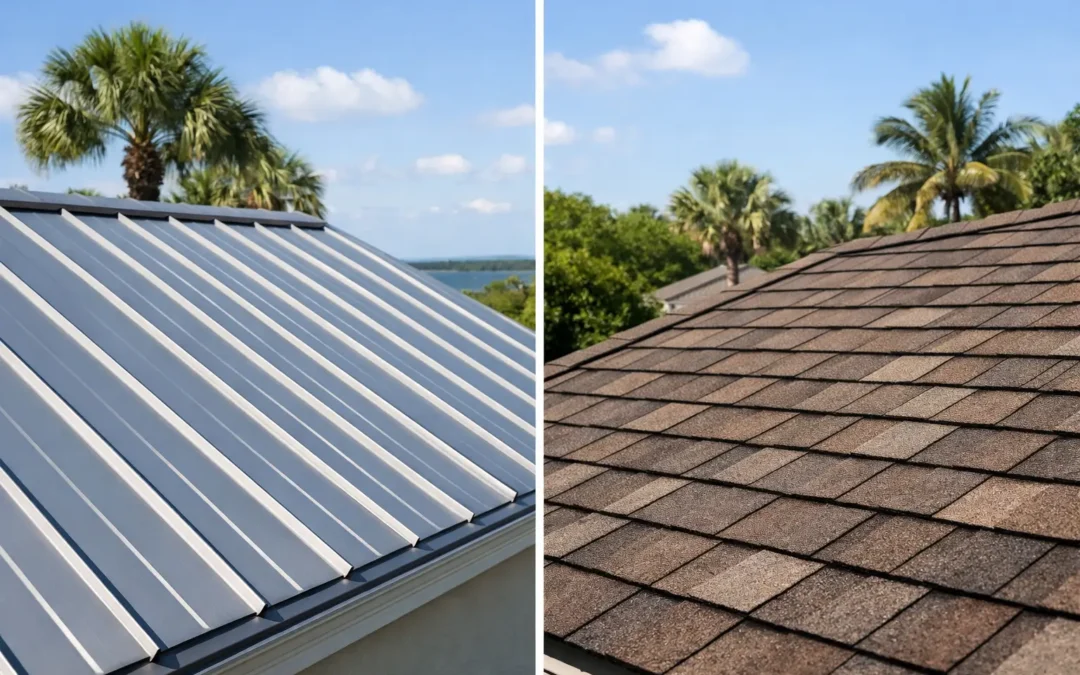
A roof choice in Northeast Florida is rarely just about color or curb appeal. Metal versus shingle roofs is a decision about how your home will handle punishing sun, wind-driven rain, humidity, salt air near the coast, and the next named storm. Both materials can protect a home well when they are properly specified and installed. The better option depends on your budget, roof design, long-term plans, and the condition of the structure beneath the roof.
For many Jacksonville homeowners, architectural shingles remain the practical, proven choice. Metal can be an excellent long-term upgrade, particularly for owners planning to stay put and willing to invest more at the start. The right answer comes from looking beyond the initial estimate.
Metal Versus Shingle Roofs: The Core Difference
Asphalt shingles create a layered roof covering. Individual shingles overlap to shed water, and modern architectural shingles offer dimension, stronger construction, and a broad range of colors. They are familiar, versatile, and suitable for many roof shapes.
Metal roofing uses larger panels or shingles made from coated steel, aluminum, or another metal. Standing-seam systems, with concealed fasteners and raised seams, are a common premium choice for residential properties. Some metal systems use exposed fasteners, which can cost less but require close attention to fastener condition and maintenance over time.
Neither material is automatically storm-proof. Roof performance depends on the complete system: decking, underlayment, flashing, ventilation, attachment methods, workmanship, and the material selected. A high-quality roof installed without proper flashing around walls, valleys, vents, and chimneys can still develop leaks.
Upfront Cost and Long-Term Value
Shingle roofing usually has the lower upfront cost. That matters when a roof replacement is urgent after a leak or storm event, or when a homeowner needs a durable solution within a defined budget. Architectural shingles also provide a strong appearance-to-cost balance and can complement everything from traditional Jacksonville homes to newer planned-community properties.
Metal costs more initially, sometimes substantially more depending on the panel profile, roof complexity, trim details, and substrate repairs required. The investment may make sense when you expect to own the home for decades, want a distinctive appearance, or prefer a roof with a potentially longer service life.
The long-term calculation should be honest. A metal roof may last longer than a shingle roof, but it does not eliminate the need for inspections, maintenance, or repairs after severe weather. It can also be more expensive to modify later if a new vent, skylight, or rooftop penetration is needed. Shingles may need replacement sooner, yet repairs are often more straightforward and less costly in isolated areas.
Financing can help homeowners weigh a higher initial investment against a monthly payment, but financing should support a sound decision rather than push a material that does not fit the home or budget.
How Each Roof Handles Florida Weather
Florida roofs endure more than occasional rain. Extended UV exposure can age materials, afternoon downpours test drainage, and hurricanes can expose weak connections throughout the roof system.
Wind and Wind-Driven Rain
Quality architectural shingles can achieve strong wind ratings when installed to manufacturer specifications with the correct starter materials, nailing pattern, and compatible components. However, shingles have individual edges that can lift when wind finds a weak point.
A properly engineered metal system can offer excellent wind resistance, especially standing-seam panels installed with the appropriate clips, fasteners, and perimeter details. Metal panels shed water efficiently and have fewer horizontal seams. Still, panel length, attachment spacing, roof geometry, and local code requirements matter. A metal roof is only as dependable as the installation details beneath and around it.
For either roof, homeowners should ask how the contractor plans to address roof-to-wall connections, flashing, underlayment, and ventilation. Those details often determine whether a roof withstands a storm or allows water into the attic.
Heat, Sun, and Energy Use
Metal reflects a portion of solar heat, particularly in lighter or reflective finishes. That can reduce heat absorption at the roof surface. The actual effect on utility bills varies with attic insulation, ventilation, ductwork, home orientation, and air-conditioning habits. A reflective roof cannot compensate for inadequate insulation or poorly sealed attic penetrations.
Shingle roofs absorb more heat than many reflective metal finishes, especially in darker colors. Yet a properly ventilated attic and a well-designed roofing system can still deliver dependable performance. Homeowners should choose color with both appearance and heat exposure in mind, rather than assuming material alone will solve an energy problem.
Rain, Humidity, and Coastal Conditions
Florida’s moisture makes ventilation and water management essential. Shingle systems need adequate attic airflow to help manage heat and moisture. Metal systems require careful detailing to prevent water intrusion at penetrations and transitions.
For homes near the coast, material selection deserves additional attention. Salt air can accelerate corrosion if the wrong metal, coating, or fastener is used. An experienced local roofing contractor can recommend a system suited to the property’s exposure rather than treating every Jacksonville-area roof the same.
Lifespan, Maintenance, and Repair Expectations
A well-installed architectural shingle roof commonly provides decades of service, though its real lifespan is affected by sun exposure, storm history, ventilation, and maintenance. Missing shingles, cracked seals, granule loss, and damaged flashing should be addressed promptly before small issues become decking damage or interior leaks.
Metal roofs can have a longer expected lifespan, but they are not maintenance-free. Homeowners should periodically check for loose fasteners where applicable, failing sealant, scratched finishes, debris in valleys, and flashing movement. After a major storm, a professional inspection remains wise even when damage is not obvious from the ground.
Repairs are one area where roof design matters. Replacing several damaged shingles is generally familiar work. Repairing metal panels may involve matching the profile and finish, accessing concealed clips, or addressing a long panel that runs from ridge to eave. This does not make metal a poor choice, but it is a trade-off worth understanding before installation.
Appearance, Neighborhood Rules, and Resale
Architectural shingles work with nearly every home style and are widely accepted by homeowners associations. They offer extensive color choices and can give a replacement roof a clean, dimensional appearance without changing the character of the home.
Metal can suit coastal, farmhouse, contemporary, and transitional designs exceptionally well. It also comes in more styles than many homeowners expect, including standing seam, metal shingles, and tile-like profiles. Before selecting a color or profile, confirm HOA requirements and consider how the material will look against brick, siding, stucco, trim, and neighboring homes.
Resale value is not guaranteed by either roofing material. Buyers tend to value a roof that is newer, professionally installed, transferable under a strong warranty when available, and appropriate for the home. Keeping installation records, product documentation, and maintenance history supports that value regardless of material.
What About Solar?
A roof replacement is often the right time to consider solar because the roof and energy systems can be planned together. Shingle roofs can support integrated solar options, including GAF Timberline Solar™ roofing shingles, which are designed to work as part of the roof rather than sitting above it as a separate-looking array.
Metal roofs can also work well with solar, particularly standing-seam systems that may allow certain mounting methods without additional penetrations through the panels. The best approach depends on roof orientation, shade, electrical needs, roof age, and the solar system selected. If your existing roof is near the end of its life, replacing it before adding solar can prevent the added cost and disruption of removing and reinstalling panels later.
Choosing the Right Roof for Your Property
Choose shingles when you want a dependable, attractive roof with a more accessible initial investment, broad style flexibility, and straightforward future repairs. For many Florida homes, a premium architectural shingle system installed by a qualified contractor is the right balance of protection and value.
Consider metal when you plan to stay in the home long term, prioritize a longer-lived material, want reflective performance or a distinct architectural style, and are prepared for the higher initial cost. It can be especially compelling on simple rooflines where long, clean panels show their strengths.
The decision becomes more complex on a roof with many valleys, dormers, skylights, chimneys, and transitions. Those features add labor and flashing detail to any roof, but they can narrow the cost gap or change the practical advantages of one material over another.
A thorough estimate should examine the roof deck, ventilation, flashing, code requirements, storm-related needs, and the manufacturer warranty available for the chosen system. Stonebridge helps homeowners evaluate those details before work begins, so the recommendation fits the property instead of following a one-size-fits-all sales pitch.
Your roof should give you confidence when the forecast turns ugly. Start with a professional inspection, compare the complete systems rather than material samples alone, and choose the option that protects your home, your budget, and your plans for the years ahead.