
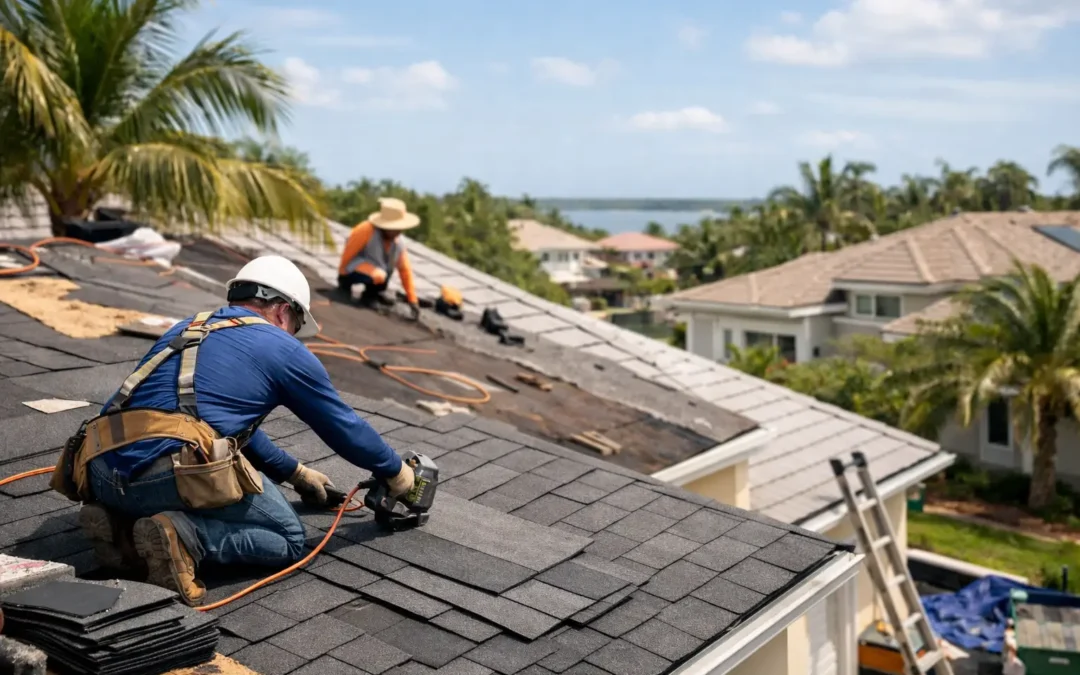
A roof replacement is not a cosmetic weekend project. For a Northeast Florida homeowner, it is a carefully timed investment in protecting your family, belongings, and property from driving rain, intense sun, humidity, and hurricane-force winds. This residential reroofing project guide explains what should happen before, during, and after a reroof so you can make decisions with confidence rather than react to the next storm.
Start With the Right Reason for a Reroof
A roof does not need to be actively leaking to be nearing the end of its useful life. Curling or missing shingles, cracked or slipped tiles, granule loss, soft decking, stained ceilings, and recurring repairs can all point to a system that needs more than another patch. In Florida, prolonged heat and moisture can accelerate aging, while wind-driven rain can expose weak points that were not obvious during dry weather.
The first step is a professional inspection that looks beyond the visible roof surface. A qualified contractor should assess the roofing material, flashing, penetrations, valleys, ventilation, gutters, and accessible areas of the roof deck. The goal is to determine whether a focused repair will provide reliable protection or whether replacement is the more responsible long-term choice.
There is a trade-off. A repair can make good sense when damage is isolated and the existing roof still has meaningful service life. But repeated repairs on an aging system can become expensive while leaving your home exposed to the next weather event. A clear estimate should explain that distinction without pressure.
Your Residential Reroofing Project Guide: Planning Phase
The best reroofing projects are decided before materials arrive in the driveway. Once you have an inspection, review the scope of work carefully. It should identify the roof areas being replaced, the material system proposed, whether tear-off is included, how damaged decking will be handled, and the expected approach to flashing, ventilation, cleanup, and permitting.
Choose a Complete Roofing System
Roofing materials should be selected for more than color. Your choice affects wind performance, expected longevity, maintenance needs, weight, appearance, and budget. Architectural asphalt shingles remain a popular option because they offer reliable performance and a broad range of styles. Tile and metal can suit certain homes and long-term plans, but each has structural, installation, and cost considerations that deserve a site-specific conversation.
For an asphalt shingle roof, the shingles are only one part of the system. Underlayment, starter strips, ridge components, sealants, flashing, and ventilation all work together to move water away from vulnerable areas and help the roof perform as designed. Established manufacturers such as GAF, Owens Corning, CertainTeed, and Eagle Roofing offer system components and warranty options that may vary by product and installer qualification.
If you are considering solar, reroofing is often the right time to plan for it. An integrated solution such as GAF Timberline Solar shingles can combine roof replacement and energy production in one coordinated project. It may be a strong fit for homeowners who want a streamlined look, but roof orientation, shading, household energy usage, budget, and electrical requirements all affect whether solar makes sense.
Confirm Permits, Insurance, and Credentials
A reputable contractor should manage the permitting process required for your location and build the work around applicable code requirements. Ask who will pull the permit, whether inspections are anticipated, and how any required approvals affect the schedule. Homeowners should also verify that the contractor is properly licensed and insured before work begins.
Credentials matter because reroofing is skilled work, not simply material installation. Stonebridge is a GAF Master Elite® contractor, a designation held by fewer than 2% of roofing companies nationwide. That level of manufacturer training can also provide access to enhanced warranty options when qualifying systems are installed.
Before signing, ask for a written proposal and review payment timing, material selections, warranty terms, and the process for change orders. Decking damage is one common variable: it may not be fully visible until the old roof is removed. A dependable contractor will explain how that possibility is documented and priced rather than surprising you after the project starts.
What Happens During Roof Replacement
A residential reroof typically begins with site preparation. The crew should protect landscaping and exterior areas as reasonably as possible, position debris containers carefully, and explain access needs for vehicles and workers. Move patio furniture, cover or relocate delicate outdoor items, and make arrangements for pets that may be distressed by noise and unfamiliar activity.
The old roofing materials are then removed, exposing the deck beneath. This is one of the most valuable stages of the project because it allows the installer to inspect the substrate supporting the new roof. Any deteriorated or damaged decking should be addressed before the new system is installed. Covering a weak deck with new materials may look finished from the ground, but it does not deliver the protection you are paying for.
Next comes the water-management layer. Depending on the roof design and material, this can include underlayment, leak barriers in critical areas, new flashing around chimneys and walls, and carefully sealed penetrations for vents or pipes. These details matter as much as the field shingles because leaks commonly begin where roof planes meet or where something passes through the roof.
New materials are installed according to manufacturer specifications and local code. Proper fastening patterns, alignment, overlap, ridge work, and ventilation are essential in Florida conditions. Do not judge quality only by how the roof looks on installation day. The true measure is how consistently the system sheds water and resists wind over years of changing weather.
Most single-family reroofs can be completed in a matter of days, though size, pitch, material type, weather, deck repairs, and permit inspections can extend the timeline. Rain can pause portions of the work for safety and quality reasons. A professional crew will monitor conditions and keep the roof protected if the schedule is interrupted.
Prepare Your Home and Household
Roof replacement creates vibration, noise, and some temporary disruption. Remove fragile items from walls and shelves, especially in rooms directly below the roofline. Protect attic belongings from dust, and let the crew know about sprinklers, septic systems, gates, pool equipment, or other property features that require care.
Expect nails and debris to be managed throughout the job, not only at the end. Responsible contractors use tarps, organized disposal practices, and magnetic sweeps to collect stray fasteners. Even with careful cleanup, it is wise to keep children and pets away from work areas until the final walkthrough is complete.
Communication should remain straightforward. You should know who your point of contact is, what time work is expected to begin, and how weather or unexpected repairs will be communicated. A contractor who is responsive before the contract is signed should remain accountable once the roof is underway.
Protect the Investment After Installation
When installation is complete, request a final walkthrough. Review the finished roof from the ground, ask about the warranty registration process, and confirm that permit inspections have been completed or scheduled. Keep copies of your contract, paid invoice, warranty documents, product information, and any photos taken during the work. These records can be valuable for insurance discussions and future home sales.
A new roof still benefits from basic attention. Keep gutters and roof valleys clear of leaves, watch for branches rubbing against the surface, and schedule an inspection after a major storm if you see signs of damage. Avoid allowing unqualified workers to make penetrations for satellite equipment, vents, or other additions without coordinating with a roofing professional.
Your roof is one of the few parts of your home that must perform every day without asking for attention. Choose a contractor who treats the reroof as a complete protection system, ask clear questions before work begins, and give yourself the advantage of a sound roof before Florida weather puts it to the test.