Whether you’re working on a new roof construction or a roof replacement, one of the most important factors you should look into is the presence and quality of the warranty or warranties that accompany your new roofing system. Manufacturing warranties protect you from manufacturing defects that can lead to unexpected or premature roof failure. Workmanship warranties are your protection against roof failure or damage caused by installation errors.
These are the features that you should look for if you want a strong and reliable roofing warranty:
Reputable Brand of Products
Reputable manufacturers back their products with reliable warranties that are often comprehensive. These warranties also typically have long coverage, and it’s easier to file against them if problems arise with your roofing system. It’s a good idea to purchase roofing products from known manufacturers.
Licensed and Certified Contractor
It’s also advisable to choose roofing companies that have a long history of excellence over new or inexperienced contractors. The best contractors are licensed to operate in your area, and they are certified by the manufacturers of the products they carry so you can be sure they know what they’re doing. Reputable contractors also often back their workmanship with a separate warranty.
Length of Warranty
The leading roofing material brands include warranties with their products that will cover you for many years to come. Some of their warranties are special, so they’re good for a longer period of time, have more coverage, and might even be transferable should you choose to sell your home.
Warranty Coverage
Learn about the kind of coverage your warranty offers. What are the conditions, the inclusions, and the exclusions? Will your coverage include the labor, or should you get a separate warranty for that? Lastly, find out what things can void your warranty so you know what to avoid. Knowing what you can expect from your warranty can save you from a lot of issues.
Limitations
A lifetime warranty is actually a lifetime “limited” warranty. It might last for as long as the roofing materials are expected to last. Many warranties will cover only a portion of the expected lifespan of the product.
Stonebridge Roofing, Waterproofing and Exteriors can discuss your roofing warranty with you. We are trusted roofers and home exterior experts. Call us today at (904) 262-6636, or contact us here.
Spring won’t be due until a couple of months from now, but it’s never too early to start planning your upcoming roof maintenance. Here are some good roof maintenance habits to start this year.
1. Make Roofing Inspections Part of Your Regular Home Maintenance Visual inspections complement the scheduled maintenance performed by your roofing contractors and can be done without climbing onto your roof. On a clear day, take a pair of binoculars, and inspect the roofing surface for signs of damage, including missing flashing and aging asphalt shingles. Call your roofing contractor for repairs in case you find such problems.
2. Trim the Trees in Your Yard If you have trees on your property, maintaining a clearance between the roofing surface and the outermost branches has many benefits. It helps prevent scratches on the roofing surface. It helps reduce leaves and needles getting into the gutters, and it helps avoid damage to the roof that’s usually caused by falling branches. Roofing companies like us recommend keeping a clearance of about 10 feet. An arborist can help you trim the branches without harming the tree.
3. Clean the Gutters Many people consider their gutters as a separate system, but they are very much a part of the roofing system. Clogged gutters can cause damage to the roof. Gutters generally require cleaning twice a year. You can choose to do this yourself as part of your house maintenance routing, or you can hire a professional. Gutter protection systems can help reduce gutter maintenance requirements and are worth the investment.
4. Stick to Your Maintenance Routine Roof maintenance is only effective if you stick to your routine. Fortunately, it’s not something you need to do every day. Set a reminder at the beginning of spring and autumn. Clean the gutters, inspect the roof, and call for roofing assistance when needed.
Stonebridge Roofing, Waterproofing, and Exteriors is your leading provider of roof replacement and installation services. Give us a call at (904) 262-6636. You can also fill out our contact form to schedule an appointment.
There are many household problems that can be put off until later, but fixing a leaking roof is not one of them. In fact, it should always be prioritized no matter what the season. Here’s why.
1. Moisture Damage
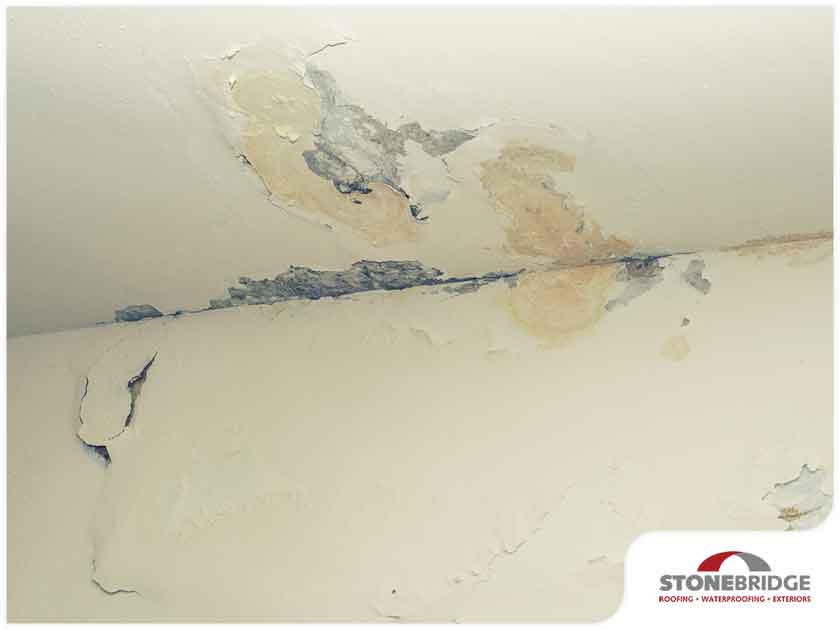
The attic, ceiling, and roofing support structures are mostly made of wood, which happens to be vulnerable to damage caused by moisture. While these components are treated for resistance to high humidity levels, they can be damaged by water coming from a leaking roof. This can result in rot that can later compromise the roof’s structure. Further issues like water stains, blistering paint, and swollen plaster can also happen if the moisture makes its way toward other parts of the house.
2. Mold Mold thrives in warm and humid places, away from direct sunlight. A leaking roof meets all three conditions, making it the perfect environment for mold growth. Mold causes more than just its tell-tale odor and hard-to-remove stains. Its spores can trigger like allergies and respiratory problems including rhinitis, asthma, and nasal congestion. If it spreads throughout the attic, it may necessitate a premature roof replacement.
3. Electrical Hazard Water from a roof leak may find its way into electrical wiring, power outlets, or appliances, which can lead to shorted wiring. If you notice water dripping into these parts of your home, don’t touch the appliance or try to unplug it. Instead, turn it off from the panel, and call a local electrician as soon as possible.
4. Slipping Hazard Water from a leaking roof can form puddles on the floor where you least expect it, making it a slipping hazard for anyone in your home. If you have carpeting that isn’t adhered to the floor, water can make its way under the carpets and make them slippery.
5. Damage to Attic Insulation Most types of attic insulation form clumps when in direct contact with water. When this happens, the insulation layer forms holes that would defeat its purpose. Poor insulation can facilitate thermal transfer and allow heat to easily pass between your indoor and outdoor spaces. This results in higher indoor heating and cooling requirements, meaning higher energy bills.
Stonebridge Roofing, Waterproofing, and Exteriors are one of the leading roofing companies serving communities in Jacksonville. Give us a call at (904) 262-6636.
The sound of rain can be soothing for some people. But when it’s causing your gutters and downspouts to create strange sounds, the noise can be very annoying. Before you dismiss this as a merely frustrating circumstance, take note that the gutter and downspout noise that you’re hearing could indicate a problem.
Here are a few common reasons why your gutters and downspouts are noisy.
Poor Installation
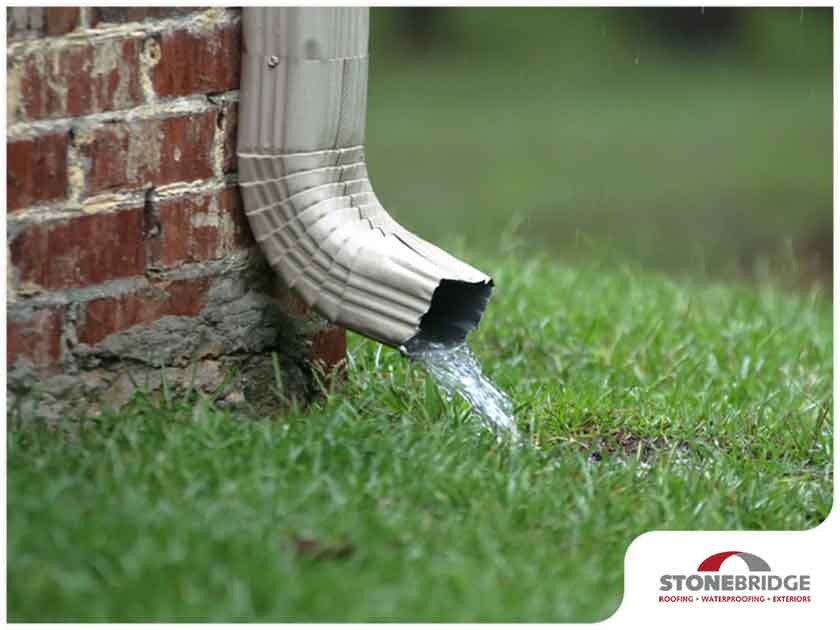
Your downspouts should be installed at a slight angle to be effective in draining water away and preventing any buildup on your roofing. So, when you hear a drip-drip sound coming from your downspouts, it could be that they have not been installed properly. Water is likely being directed to one corner of your downspout, causing the noise that you are hearing.
Clogging
Clogging is a common issue in gutters and downspouts. What usually happens is that leaves, twigs, and debris get stuck inside your gutters. This causes a blockage and prevents water from flowing out of your gutter system. When left unchecked, this can cause noise in your gutters and lead to problems that will require a roof repair.
Loose Brackets
Brackets are critical components because they are responsible for securing your gutters in place. Unfortunately, as these brackets age and deteriorate, they become loose and start producing odd noises. However, if your brackets are relatively new, the culprit could be the changing temperature. Gutters may expand and contract as temperatures fluctuate. This causes the brackets to be pulled out of place and create noise.
Stonebridge Roofing, Waterproofing, and Exteriors has over 30 years of experience in home exterior waterproofing and concrete restoration. But apart from these, we also have expertise in roofing, gutters, windows and doors, and more. Call us at (904) 262-6636.
Painting the inside of your home can be done any time of the year. Since interiors are typically controlled environments, you don’t have to worry about things like humidity and temperature. Painting home exteriors, on the other hand, can be a tricky business because you have to take a variety of weather elements into account.
When to Paint Your Home
There really is no universally accepted best time to paint your home, particularly your exteriors, since it largely depends on the kind of climate and weather in your location. However, many experts and homeowners find summer as the most optimal season for painting home exteriors because of the warm weather and minimal rain.
Of course, summer does not always mean the same thing across the country. For example, if you live in an area that experiences hurricanes toward the end of the summer, you might want to schedule your painting job at the start of the season. This is also one of the reasons why Jacksonville roofers may urge you to schedule repairs or replacements around this time.
You can also opt to paint in the autumn, particularly early fall. This is usually a good time to paint because daytime and nighttime temperatures are often closer than at other times of the year. Remember that paint doesn’t dry well when temperatures drastically fluctuate in the morning and in the evening.
Other Factors to Consider
While temperature, humidity, and ideal weather conditions are essential considerations when planning your home painting project, there are also other things that you should note – such as paint quality. Never skimp on this one because you would want your paint to last for several years and to withstand any weather condition. Consider the application of the paint as well. Make sure it’s appropriate for your climate or the current season.
Stonebridge Roofing, Waterproofing, and Exteriors is a full-service exterior construction company trusted by local customers. We offer a range of services, including roof replacement, waterproofing, painting, and more. Call us at (904) 262-6636.
Installing a tile roof is a challenging task. Aside from working with heavier roofing materials compared to asphalt shingles and metal roofing, ceramic tiles are also more expensive. This means roofers can’t afford to make the following mistakes.
Failing to Check the Building Codes
Some Jacksonville roofers think putting up a tile roof is fine if they’ve already built one before. However, some make the mistake of not checking the building codes. If a new roof is checked, and the inspector discovers that it goes against the local building codes, the homeowner might be fined, and the roof asked to be torn down or modified.
Ignoring Manufacturer’s Specifications.
Reputable roofing experts like us know that putting up a tile roof goes beyond laying them in neat rows. Tile roofing must be installed according to the manufacturer’s specifications. Failing to follow these specifications (placing tiles too close or far, using fewer nails, etc.) can compromise the roof’s ability to perform as advertised, resulting in early repairs or even replacement.
Not Installing Flashing Over Pitch Transitions
Roofers know that flashing should be applied along places where the roof intersects with the wall, but some make the mistake of just using sealant to cover pitch transitions (the parts where the roof changes in steepness). According to our experts, pitch transitions are especially vulnerable to creating leaks so they should be covered by actual flashing strips.
Not Having Ridge Anchors
When roofers forget to add ridge anchors to secure tiles in high-ridge areas, they become more vulnerable to getting knocked off during a storm.
Get a tile roof that can keep your home protected from the worst weather conditions. Stonebridge Roofing, Waterproofing, and Exteriors is the leading roofing company in the area. You can call us at (904) 262-6636 to request a quote.