
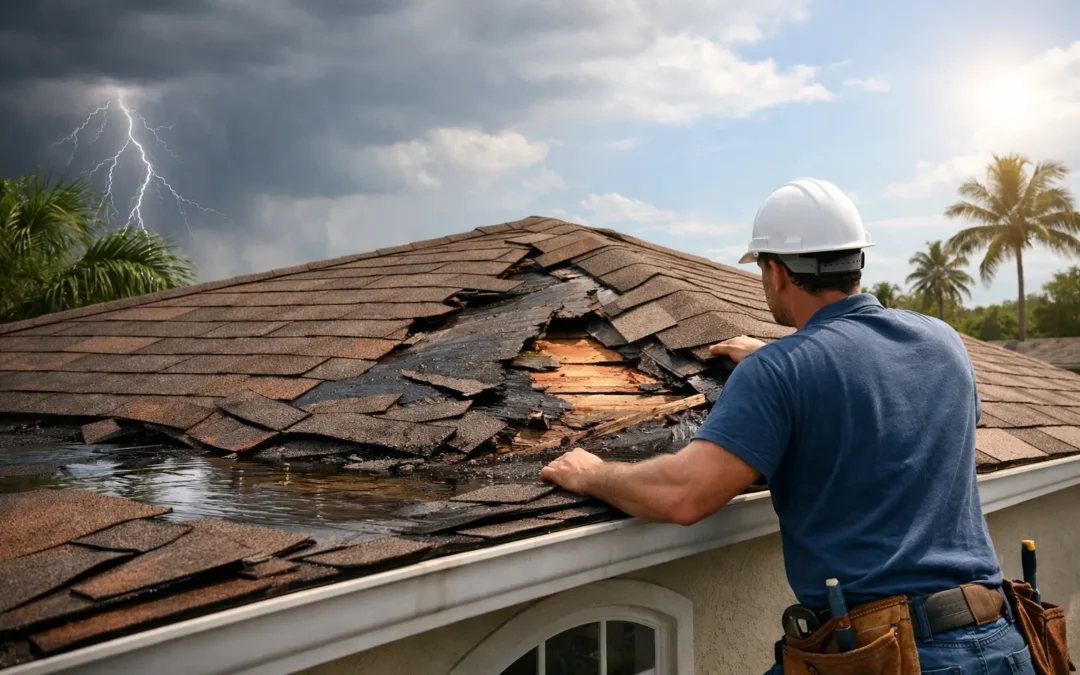
A roof rarely fails on a convenient schedule. In Northeast Florida, months of intense UV exposure, heavy rain, humidity, wind, and hurricane-season storms can turn a small weakness into a leak with little warning. Knowing the signs you need roof replacement gives you time to make a clear decision, compare options, and protect your home before water reaches the rooms below.
A repair is often the right answer when damage is limited and the rest of the roofing system is sound. But repeated repairs on an aging roof can become more expensive than replacement, especially when underlying materials have begun to deteriorate. The key is looking beyond the visible symptom and understanding what it says about the roof as a whole.
1. Your Roof Is Nearing the End of Its Expected Life
Age alone does not automatically mean replacement is necessary, but it should prompt a professional inspection. Asphalt shingle roofs commonly last around 15 to 25 years in Florida, depending on material quality, installation, ventilation, maintenance, shade, and storm exposure. Tile, metal, and commercial roofing systems have different life spans, but each still needs periodic evaluation.
If your roof is approaching its expected service life and has begun showing wear, planning a replacement can be the more responsible choice. Waiting until a leak appears may mean dealing with wet insulation, stained ceilings, damaged drywall, or mold concerns in addition to the roof itself.
2. Shingles Are Curling, Cracking, or Losing Granules
Shingles should lie flat and create a consistent protective surface. Curling edges, cracked tabs, bald spots, and blistered areas indicate that the material is no longer handling heat and weather as it should. Florida sun can dry out shingles over time, making them more brittle and more vulnerable to wind damage.
Granule loss is another important warning sign. A few loose granules are normal, particularly after installation, but excessive granules in gutters or at the bottom of downspouts can mean shingles are wearing out. Those granules protect the asphalt layer from ultraviolet exposure. Once they are gone, the shingles can age quickly.
A localized problem may be repairable. Widespread wear across several roof slopes usually points toward replacement rather than patching isolated areas.
3. You Have Recurring Leaks or Water Stains
A single leak around a vent pipe, flashing detail, or damaged shingle may be repaired successfully. Recurring leaks are different. If water keeps appearing after repairs, or if leaks show up in more than one location, the roof system may be failing beyond one repair point.
Look for brown ceiling stains, peeling paint, damp attic insulation, mildew odors, or soft drywall. Water does not always enter directly above the stain you see. It can travel along roof decking, rafters, insulation, or wiring before becoming visible inside.
Do not wait for a stain to grow. Water intrusion can quietly damage framing and insulation long before it creates a major ceiling problem. An inspection can identify whether the issue is a repairable detail or one of the clearer signs you need roof replacement.
4. Storm Damage Keeps Returning
Jacksonville-area roofs must stand up to more than ordinary rainfall. Wind-driven rain can force water beneath damaged shingles and flashing. Tropical systems can lift shingles, crack tiles, damage vents, loosen gutters, and expose vulnerable roof edges. Even when a storm does not create an immediate leak, it may weaken the roof enough for the next storm to do so.
After severe weather, check from the ground for missing shingles, displaced ridge caps, broken tiles, bent metal, fallen branches, or debris collecting in valleys. Avoid climbing onto the roof yourself. Wet surfaces, hidden soft spots, and loose materials make that a dangerous job.
If storm repairs have become a regular part of homeownership, a full replacement may provide better long-term protection than continuing to repair an older, compromised system. New roofing also allows a contractor to address flashing, underlayment, ventilation, and other components that determine how the entire system performs in Florida weather.
5. The Roof Deck Feels Soft or Looks Uneven
A roof should have clean, even lines. Sagging areas, visible dips, or a wavy appearance can signal damaged decking, trapped moisture, or structural concerns beneath the surface. In the attic, look for daylight coming through the roof deck, dark staining, damp wood, or plywood that appears warped.
Soft decking is especially concerning because it means the roof may not provide a secure base for new shingles or tiles. Simply covering the surface without addressing the damaged substrate is not a lasting solution. Proper replacement work includes evaluating the deck and replacing deteriorated materials where necessary.
6. Repairs Are Becoming More Frequent and More Expensive
There is no shame in repairing a roof. Timely repairs are a practical part of responsible maintenance. The question is whether each repair is extending the roof’s useful life or only buying a short amount of time.
Consider replacement when you are calling for repairs every year, when new leaks appear after prior fixes, or when the roof has widespread aging plus a recent storm issue. A lower upfront repair cost can be appealing, but repeated service visits, interior damage, and the risk of an emergency tarp can add up quickly.
A trustworthy roofing professional should explain both options clearly. You deserve to know what a repair can realistically accomplish, how long it may last, and whether replacement would be the better investment for your property.
7. Moss, Algae, or Dark Streaks Are Hiding Deeper Wear
Dark streaks are common in Florida’s humid climate and are often caused by algae. On their own, they do not always mean you need a new roof. However, algae, moss, debris buildup, and persistent moisture can make it harder to see cracked shingles, granule loss, or failing flashing.
A professional inspection separates cosmetic staining from signs of material deterioration. Cleaning may improve appearance when the roof is otherwise healthy. If the roofing is brittle, porous, curling, or nearing the end of its life, cleaning alone will not restore its protective performance.
8. Your Energy Bills Have Risen Without a Clear Reason
Your roof affects attic temperature, ventilation, and insulation performance. When roofing materials, vents, or attic airflow are compromised, your air conditioning system may work harder during long Florida summers. Higher energy bills do not prove the roof needs replacement, since HVAC equipment, insulation, ductwork, and windows can also contribute.
Still, an aging roof inspection is a sensible step when rising cooling costs coincide with other warning signs. A replacement project can be an opportunity to improve ventilation and consider energy-minded materials. For homeowners evaluating solar, an integrated roof-and-energy plan may also make more sense than installing panels on a roof that will soon need replacement.
9. You Are Selling, Buying, or Insuring a Home With an Aging Roof
A roof’s condition can affect inspections, insurance conversations, financing, and buyer confidence. Homeowners preparing to sell may find that a visibly worn roof becomes a major negotiation point. Buyers should be cautious about a roof near the end of its expected life, even if it is not leaking on inspection day.
Insurance requirements also vary, particularly in Florida. An older roof may require documentation, inspection, repair, or replacement depending on the carrier and policy. Do not assume that a roof is acceptable simply because it has not failed yet. A detailed professional assessment gives you a clearer picture of its current condition and likely remaining service life.
What a Roof Replacement Inspection Should Tell You
A useful inspection should do more than identify a missing shingle. It should assess the condition of the roofing material, flashing, penetrations, valleys, roof edges, ventilation, gutters, and visible decking or attic conditions. It should also account for the roof’s age, previous repairs, storm history, and the type of system installed.
For replacement recommendations, ask what materials are being proposed, how the underlayment and flashing will be handled, what warranty options are available, and whether damaged decking is included in the scope. Quality installation matters as much as the shingles or tiles selected. A roofing system is only as dependable as the workmanship behind its critical details.
Stonebridge helps homeowners and property owners make those decisions with clear evaluations, quality materials, and professional installation standards built for Florida conditions. Whether the answer is a focused repair or a complete reroof, the goal should be the same: dependable protection for the property and the people inside it.
If you have noticed more than one of these warning signs, schedule an inspection before the next major storm tests the roof for you. A planned decision gives you more control, better options, and greater peace of mind than an emergency repair ever will.