
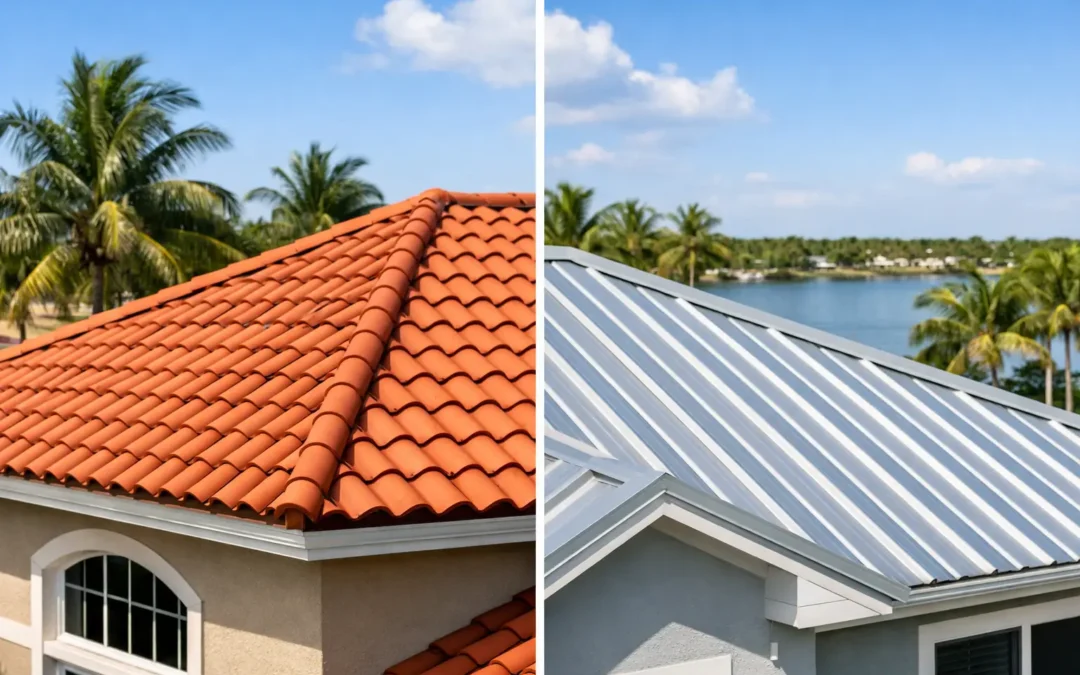
A roof choice in Northeast Florida is rarely just about curb appeal. It has to stand up to punishing UV exposure, sudden downpours, wind-driven rain, salt air near the coast, and the possibility of a named storm. When weighing tile versus metal roofing, homeowners need to look beyond the initial price and consider how each system will protect the home over decades.
Both can be excellent premium roofing options when they are correctly specified and professionally installed. The better fit depends on your home’s structure, architectural style, budget, location, and plans for the property.
Tile Versus Metal Roofing: The Big Differences
Tile roofing is known for its substantial appearance, dimensional profile, and long lifespan. Clay and concrete tiles are common choices in Florida, especially on Mediterranean, Spanish, coastal, and upscale traditional homes. Individual tiles overlap to create a distinctive roof surface with natural ventilation beneath the material.
Metal roofing is typically installed in large panels or shingles made from steel, aluminum, or other durable metals. Standing-seam panels provide a clean, modern look with concealed fasteners, while metal shingles and stone-coated metal products can create a more traditional appearance.
The most visible difference is style, but the practical differences matter just as much. Tile is heavier, generally more expensive to repair when individual pieces break, and requires a structure capable of supporting its weight. Metal is much lighter and sheds water quickly, but its performance depends heavily on panel type, coating quality, fastening, flashing, and installation details.
How Each Roof Handles Florida Weather
Florida weather puts every roofing material to work. A roof must manage intense heat one day and heavy rain or high winds the next.
Wind and storm performance
A properly engineered and installed metal roof can offer strong wind resistance. Interlocking panels, correct clip or fastener placement, and carefully finished edges are critical. Standing-seam metal systems can be especially effective because the panels are designed to move water away quickly and use concealed fastening systems.
Tile can also perform well in high winds, but individual tiles must be attached according to the product’s approved installation method and local building code. A loose, cracked, or improperly fastened tile can become vulnerable during a storm. Tile roofs also need secure underlayment and flashing because the tile itself is only one part of the complete water-shedding system.
Neither material is automatically hurricane-proof. Wind ratings, roof slope, decking condition, attachment methods, roof geometry, and the skill of the installation team all affect how a roof performs when severe weather arrives.
Heat, sun, and energy comfort
Both tile and metal can help manage Florida heat. Tile naturally creates an airspace between the roof deck and the tiles, which can reduce heat transfer when paired with proper attic ventilation and insulation. Light-colored tile can also reflect more sunlight than darker roofing options.
Metal roofs can be highly reflective, particularly in lighter colors and finishes designed to reflect solar radiation. This may reduce heat absorbed by the roof surface. However, a cooler roof does not eliminate the need for good attic insulation, ventilation, and properly sealed ductwork. Those components work together to support indoor comfort and energy efficiency.
Rain and moisture
Metal has an advantage in shedding rain. Water moves quickly off smooth panels, which is useful during the hard, fast storms Jacksonville homeowners know well. Still, penetrations around vents, skylights, chimneys, and wall transitions must be flashed correctly. A metal roof is only as dependable as the details around its edges and openings.
Tile handles rain effectively when its underlayment remains in good condition. Because water can travel beneath tile during wind-driven storms, the underlayment is a crucial protective layer. On an aging tile roof, underlayment deterioration may require attention even if many of the visible tiles still look serviceable.
Weight and Structural Requirements
Weight is one of the biggest decision points in tile versus metal roofing. Tile is significantly heavier than metal. Before installing a tile roof, a contractor should confirm that the home’s framing and roof deck can safely support the selected tile system. In some cases, structural upgrades may be needed, adding cost and complexity to the project.
Metal is lightweight, making it an appealing option for homes where structural loading is a concern. It can also be a practical replacement choice when a homeowner wants a long-lasting premium roof without the added weight of tile.
This is not a detail to guess at. A thorough roof evaluation should account for the existing structure, roof pitch, decking condition, local code requirements, and the specific material being considered.
Cost: Initial Investment and Long-Term Value
Tile and metal are both premium materials, so either choice usually costs more upfront than a standard asphalt shingle roof. The final price depends on roof size, pitch, complexity, tear-off needs, decking repairs, flashing, underlayment, accessibility, and material selection.
Tile often carries a higher installation cost because of its weight, labor requirements, and the care required to stage and set individual pieces. Concrete tile may cost less than clay tile, while specialty profiles and colors can raise the price further.
Metal pricing varies widely. Exposed-fastener panels may be more budget-friendly, while standing-seam systems and high-end metal shingles represent a more substantial investment. For a primary residence, it is worth comparing the full system rather than choosing solely by the lowest panel price. Quality underlayment, edge metal, flashing, ventilation, and professional installation all contribute to the roof’s service life.
Long-term value should include expected maintenance, repair needs, insurance considerations, energy performance, and resale appeal. A roof that complements the home’s style and is installed to manufacturer specifications can be a meaningful investment in protection and property value.
Maintenance and Repair Expectations
Tile roofs need periodic inspections for cracked, slipped, or displaced tiles. Homeowners should avoid walking on tile unless necessary, as foot traffic can crack individual pieces. Valleys, flashings, and underlayment deserve particular attention, especially after storms. Replacing a damaged tile can be straightforward for a trained roofer, but matching older colors and profiles may become more difficult over time.
Metal roofs generally require less routine attention, but they are not maintenance-free. Inspections should look for loose fasteners on exposed-fastener systems, worn sealants, coating damage, debris buildup, and flashing concerns. In coastal areas, material selection and protective finishes are especially important because salt exposure can accelerate corrosion in the wrong system.
For either roof type, preventative maintenance is less expensive and less disruptive than waiting for a ceiling stain or active leak. An annual inspection and a post-storm check can identify small concerns before water reaches the roof deck or interior.
Appearance, Solar, and Home Design
Tile has a visual presence that is difficult to duplicate. It adds texture, shadow lines, and a classic Florida character that many homeowners value. If your neighborhood features stucco exteriors, arched windows, or Mediterranean-inspired design, tile may be the natural architectural match.
Metal offers more versatility than many homeowners expect. Standing-seam roofing suits coastal contemporary, farmhouse, and modern homes, while metal shingles can work with more traditional designs. It is available in a wide range of colors and profiles, allowing the roof to support the home’s overall exterior design rather than compete with it.
Solar planning may also influence the decision. Metal roofs, particularly standing-seam systems, can provide practical mounting opportunities for solar equipment with fewer roof penetrations in some designs. Solar can be installed on tile as well, but it requires careful layout, specialized mounting methods, and experienced coordination to protect the tiles and waterproofing system. If solar is part of your long-term plan, raise it during the roofing consultation rather than treating it as an afterthought.
Which Roof Is Right for Your Property?
Choose tile when architectural authenticity, long-term visual appeal, and a substantial roof profile are top priorities – and when the home’s structure is designed to carry the load. Choose metal when you want a lighter system, strong rain-shedding performance, flexible design options, and an efficient path for future solar planning.
The right answer can also depend on your location. A home near the coast may call for particular attention to corrosion resistance. A complex roof with numerous valleys and transitions may affect material costs and installation approach. A property with an aging deck or limited structural capacity may make metal the more practical choice.
Stonebridge approaches this decision as a home-protection conversation, not a one-size-fits-all material sale. A professional assessment should review the roof’s current condition, structural needs, drainage details, wind requirements, and your plans for the property before a recommendation is made.
Your next roof will be protecting your home through summer heat, afternoon storms, and whatever the next hurricane season brings. Choose the system that fits the house, install it with proven craftsmanship, and give it the attention it needs to keep doing its job.