
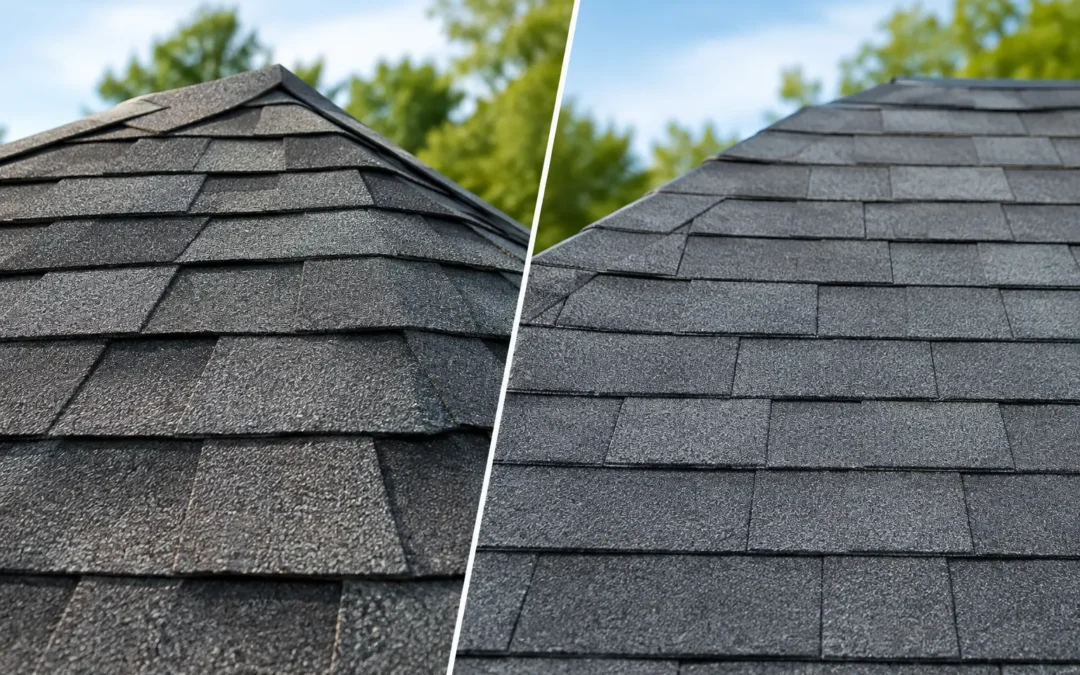
A roof in Northeast Florida has to handle more than a passing rainstorm. It faces punishing sun, humidity, wind-driven rain, tropical weather, and the occasional flying debris that comes with a major storm. That is why the choice between architectural versus three tab shingles deserves more attention than color alone. The right shingle affects how your home looks, how it weathers, and how confidently you can maintain it over the years ahead.
For many homeowners, architectural shingles are the practical first choice for a replacement roof. Three-tab shingles still have a place in certain budgets and applications, but they come with trade-offs that should be clear before work begins.
What separates architectural and three-tab shingles?
Both options are asphalt shingles, which means they use an asphalt-based waterproofing layer reinforced with a fiberglass mat and protected by mineral granules. The difference is in their construction and appearance.
Three-tab shingles are flat, single-layer shingles cut into three uniform sections, or tabs. Once installed, they create a clean, repeating pattern across the roof. They are lightweight, straightforward, and traditionally the more economical asphalt roofing option.
Architectural shingles, also called dimensional or laminate shingles, are made with multiple bonded layers. Their varied thickness creates a textured, more substantial appearance that can resemble wood shake or slate from the ground. The layered construction usually gives them greater strength than a standard three-tab product.
The visual difference matters, especially on a roof that covers a large portion of your home. But in Florida, performance is usually the bigger factor.
Architectural versus three tab shingles in Florida weather
Jacksonville-area homes need roofing materials that can stand up to repeated heat cycles, intense ultraviolet exposure, and high winds. No shingle is storm-proof, and installation details matter as much as the material itself. Still, architectural shingles generally offer a stronger starting point for demanding conditions.
Wind resistance and uplift protection
Architectural shingles commonly carry higher wind ratings than basic three-tab products, often up to 110 or 130 mph when installed with the required fastening pattern and compatible components. Product specifications vary, and a rating only applies when the roof system is installed exactly as the manufacturer requires.
Many three-tab shingles have lower standard wind ratings. Some can be installed to meet higher wind requirements, but homeowners should not assume every three-tab option provides the same protection. In areas exposed to tropical storms and hurricanes, a contractor should review the specific shingle, nail placement, deck condition, underlayment, starter shingles, and local building-code requirements.
Wind damage often begins at the roof edge or where a tab loses its seal. A quality architectural shingle can offer more resistance because of its weight, layered design, and adhesive strips. That does not eliminate the need for proper ventilation, flashing, and installation, but it can give a roof more margin when weather turns severe.
Heat, rain, and daily wear
Florida sun gradually dries and ages asphalt shingles. Heavy afternoon rain can then reveal weaknesses around penetrations, valleys, and flashing. Architectural shingles tend to be thicker and more durable against everyday wear, though their lifespan still depends on attic ventilation, drainage, workmanship, and maintenance.
Three-tab shingles can perform well when installed correctly, but their thinner profile gives them less material to absorb the long-term effects of heat and weather. On a shaded, lower-risk structure or a property with a shorter ownership timeline, that may be an acceptable compromise. On a primary residence you expect to keep for many years, the added durability of architectural shingles is often worth considering.
Cost: the upfront price is only part of the decision
Three-tab shingles usually cost less per square than architectural shingles. If a homeowner is facing an unexpected replacement, that lower initial price can be appealing. However, roof replacement is not just a material purchase. Labor, tear-off, decking repairs, underlayment, flashing, ventilation, permits, and disposal all contribute to the full project cost.
Because much of that work is necessary regardless of shingle style, moving from three-tab to architectural shingles may represent a smaller percentage increase than homeowners expect. In return, they often receive a roof with a more dimensional appearance, stronger wind ratings, and a longer expected service life.
The best value is not always the lowest estimate. A low bid may leave out critical items such as replacing damaged decking, using manufacturer-matched accessories, or correcting inadequate ventilation. Ask for an itemized estimate that explains what is included and what may change if concealed damage is found after tear-off.
Appearance, resale, and neighborhood fit
A three-tab roof has a tidy, uniform look. It can suit smaller homes, rental properties, detached garages, or projects where a simple, cost-conscious finish is the priority. It also may be appropriate when matching an existing three-tab roof on an adjacent structure.
Architectural shingles offer more visual depth and a wider range of color blends. They can make a modest roofline look more finished and can complement brick, stucco, siding, and coastal-influenced exterior colors found throughout Northeast Florida. For homeowners considering curb appeal and future resale, that extra dimension can be meaningful.
Appearance should not override performance, but it is fair to consider. A roof replacement is a major exterior investment, and the right color and profile should support the character of the property while protecting it.
Lifespan and warranty expectations
Architectural shingles typically have a longer expected lifespan than three-tab shingles. Real-world longevity, however, is not guaranteed by a label on the package. A roof advertised with a long limited warranty can still age early if it has poor ventilation, improper installation, storm damage, or neglected repairs.
Manufacturer warranties also have conditions. Some enhanced warranties require a certified contractor and a complete roofing system using qualifying components. Homeowners should ask what warranty is being offered, who performs the installation, what is covered, and whether workmanship coverage is included.
Stonebridge’s GAF Master Elite® certification gives qualifying homeowners access to enhanced warranty options that are not available through every roofing contractor. More importantly, it reflects ongoing training and a commitment to installing roofing systems according to manufacturer standards.
When three-tab shingles can still make sense
Architectural shingles are not automatically the correct answer for every property. Three-tab shingles may be a reasonable choice when a project has a strict budget, when a secondary structure needs basic dependable coverage, or when maintaining a consistent look with an existing roof is necessary.
They can also be suitable for certain low-slope-adjacent design situations, provided the roof pitch meets the manufacturer’s requirements. Asphalt shingles are not appropriate for every slope, so this should be evaluated before material selection.
The key is to make the choice deliberately. Selecting three-tab shingles solely because they are cheaper can create disappointment if the homeowner expected the same appearance, wind performance, or lifespan associated with architectural products.
Questions to ask before choosing a shingle
Before approving a roofing estimate, ask the contractor which shingle line is proposed and what wind rating applies to that exact product. Confirm whether the estimate includes tear-off, underlayment, flashing, starter material, ridge caps, ventilation work, permit handling, and cleanup.
It is also wise to ask how damaged decking is handled, how the crew protects landscaping and driveways, and what happens if rain is forecast during installation. These answers reveal more about the quality of a roof replacement than a shingle sample alone.
For homeowners weighing architectural versus three tab shingles, the better choice is usually the one that matches the property’s exposure, ownership plans, budget, and need for long-term protection. A careful roof inspection and a clear, no-obligation estimate can turn that decision from a guess into a confident plan before the next Florida storm tests your home.