
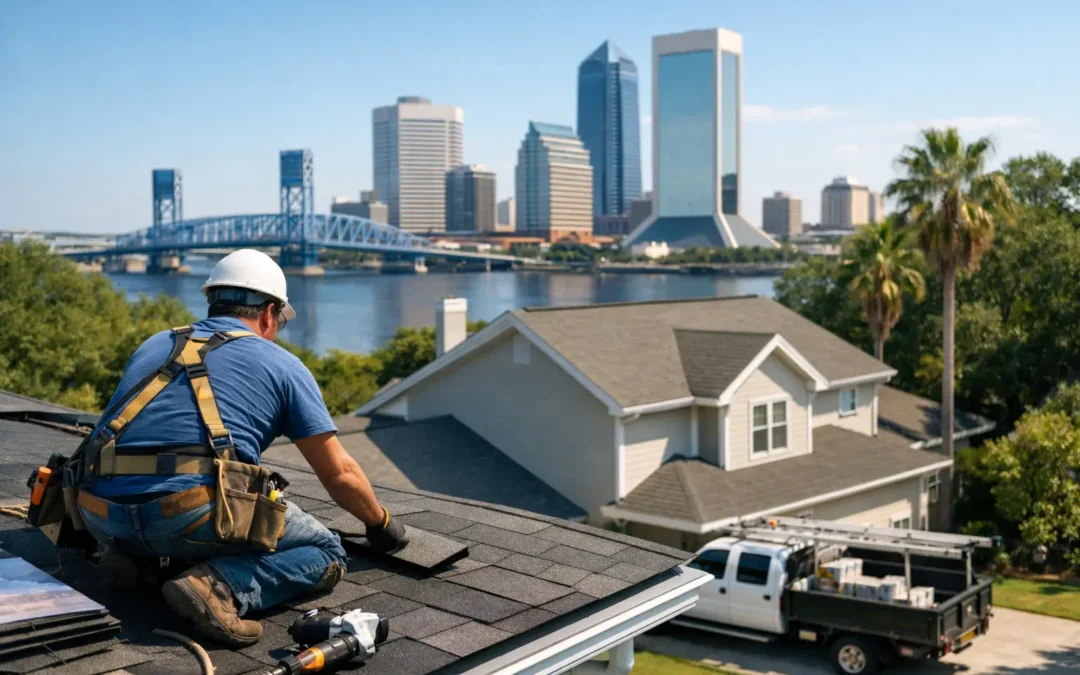
A roof can look acceptable from the driveway and still be one hard rain away from a leak. In Jacksonville, heat, humidity, intense UV exposure, wind-driven rain, and hurricane-season storms put every part of a roofing system to work. Choosing a Jacksonville FL roofing company is not simply about finding someone who can install shingles. It is about selecting a contractor who understands how to protect your home, business, and budget through the conditions Northeast Florida actually faces.
The lowest estimate can be tempting, especially when a roof replacement was not part of the plan. But a roof is a long-term protective system with layers, ventilation, flashing, drainage details, and manufacturer requirements that all matter. The right contractor helps you understand the work, documents the condition of your roof, and stands behind the result after the crew has left.
What Jacksonville Weather Demands From a Roof
Florida roofs take a different kind of beating than roofs in milder climates. Summer temperatures can accelerate aging, while daily rainstorms test flashing, valleys, pipe boots, and drainage. Salt air can also affect certain materials and metal components in coastal areas. Then there is the wind exposure that comes with tropical systems and severe thunderstorms.
This is why a roof should be evaluated as a complete assembly, not just as a field of shingles or tiles. A dependable contractor looks at the roof deck, underlayment, ventilation, flashing, penetrations, gutters, and the condition of adjoining exterior features. A missing shingle may be the visible issue, but the underlying cause could be failed sealant, weakened flashing, improper installation, or moisture that has traveled farther than expected.
Local experience matters because the best recommendation depends on your roof style, its age, the material already in place, your neighborhood’s exposure, and whether the problem is isolated or systemic. A repair may be the right answer. In other situations, repeated repairs can become an expensive way to delay a replacement that is already due.
Start With the Right Roofing Need
Before comparing contractors, define what has changed. A ceiling stain after a storm, curled or missing shingles, cracked tiles, granules in gutters, sagging areas, or an aging roof near the end of its expected service life all call for an inspection. If water is actively entering the property, emergency tarping or storm repair may be needed before a permanent solution can be planned.
For a small, recent issue on an otherwise healthy roof, a targeted repair can preserve the remaining life of the system. The trade-off is that an older roof may not accept a perfect color match, and surrounding materials can still be nearing failure. A reputable contractor should explain that distinction rather than promise that one repair will make an aging roof new again.
Replacement becomes more practical when damage is widespread, leaks keep returning, materials are brittle or worn, or a repair would affect a large portion of the roof. It can also be the better investment when a homeowner is preparing for a major exterior renovation, adding solar, or seeking stronger warranty coverage. The goal is not to sell the biggest project. It is to recommend the work that gives the property reliable protection.
How to Evaluate a Jacksonville FL Roofing Company
Credentials are a useful starting point, but they should be paired with clear communication and a detailed scope of work. Ask whether the contractor is properly licensed and insured, whether they use trained crews, and whether they have manufacturer certifications relevant to the roofing system being proposed. These details affect accountability, installation quality, and access to certain enhanced manufacturer warranties.
For example, GAF Master Elite® certification is held by fewer than 2% of roofing companies nationwide. It reflects ongoing training and compliance with GAF requirements, and it may provide access to stronger warranty options on qualifying systems. Certification alone should not make the decision for you, but it is meaningful evidence that a contractor has met a high manufacturer standard.
Also look for a company that can explain its process without hiding behind vague language. You should know how the roof will be protected during the work, how landscaping and driveways will be treated, who will manage the project, and how cleanup will be handled. Professional installation includes the details homeowners often do not see, from proper flashing transitions to magnetic nail sweeps around the property.
A trustworthy estimate should identify the roofing material, underlayment, flashing work, ventilation considerations, tear-off or disposal needs, and warranty options. It should also address possible deck repairs if hidden damage is found after old materials are removed. No contractor can see every condition beneath an existing roof in advance, but they can explain how those discoveries will be documented and approved.
Materials Matter, but System Design Matters More
Jacksonville property owners have several durable roofing choices, including asphalt shingles, tile, metal, and commercial low-slope systems. The right option depends on the roof structure, architectural style, budget, maintenance expectations, and desired service life. A material that performs well on one home may not be the best fit for another.
Established manufacturers such as GAF, Owens Corning, CertainTeed, and Eagle Roofing offer options across different roofing categories. Yet brand name alone does not guarantee performance. The underlayment, starter materials, ridge components, flashing, fasteners, attic ventilation, and installation methods must work together. A premium shingle installed over weak details is still vulnerable during a Florida storm.
Ask the contractor to explain why a particular system fits your property. For example, attic ventilation can influence heat and moisture management, but the appropriate approach depends on the home’s design and existing intake and exhaust conditions. Good recommendations are specific, not one-size-fits-all.
Read Estimates Beyond the Bottom Line
When two estimates differ significantly, compare the scope before assuming one contractor is overpriced. One proposal may include full tear-off, upgraded underlayment, new flashing, ventilation improvements, permit handling, and comprehensive cleanup. Another may omit items that become costly changes later.
Pay attention to what is written, not only what is discussed during an appointment. A clear proposal makes it easier to compare materials, labor coverage, payment terms, projected timing, and exclusions. It also creates a shared understanding of what the project includes.
Financing can be helpful for a major roof replacement or combined roof-and-solar project, particularly when an urgent failure leaves little time to save. However, financing should support a sound roofing decision, not push you into unnecessary upgrades. Review the terms carefully and choose a payment approach that works for your household or property budget.
Commercial Roofs Need a Different Level of Planning
Commercial property owners and managers need more than a fast patch when a roof issue appears. A leak can interrupt operations, damage inventory, affect tenants, and create safety concerns. Commercial roofing decisions also involve drainage, rooftop equipment, access requirements, insulation, membrane condition, and the need to minimize disruption.
A qualified commercial roofing contractor should assess the full roof condition and provide practical options, whether that means a focused repair, preventative maintenance, restoration planning, or replacement. Responsive service matters, but so does documentation that helps owners plan capital expenses instead of reacting to each new leak.
Storm Response Should Be Fast and Disciplined
After severe weather, avoid making a rushed decision based on a door-to-door pitch or a promise that sounds too easy. If your roof has active damage, prioritize immediate protection. Emergency tarping can limit further water intrusion while the roof is inspected and a permanent repair plan is prepared.
Take photos from the ground when it is safe to do so, note when the damage occurred, and keep records of visible interior impacts. A professional contractor can identify storm-related damage, explain immediate risks, and provide an estimate grounded in the actual condition of the roof. Never climb onto a wet, steep, or damaged roof to investigate it yourself.
Consider Solar When the Roof Is Ready
A roof replacement can be a smart time to consider solar energy because both projects involve long-term planning around your home’s exterior. Integrated options such as GAF Timberline Solar™ roofing shingles can provide an alternative to a traditional panel installation for homeowners who want a more unified appearance.
Solar is not automatically right for every roof. Orientation, shading, electrical needs, energy goals, roof condition, and budget all matter. The key is to avoid placing a new solar system on a roof that will soon need replacement. Coordinating roof and energy decisions can prevent unnecessary removal and reinstallation costs later.
Your roof protects the place where your family lives, works, and gathers. Choose a contractor willing to inspect carefully, explain honestly, and build for the next Florida storm, not just the next inspection. Stonebridge offers free, no-obligation estimates so Jacksonville property owners can make that decision with a clear view of their roof’s condition and options.