
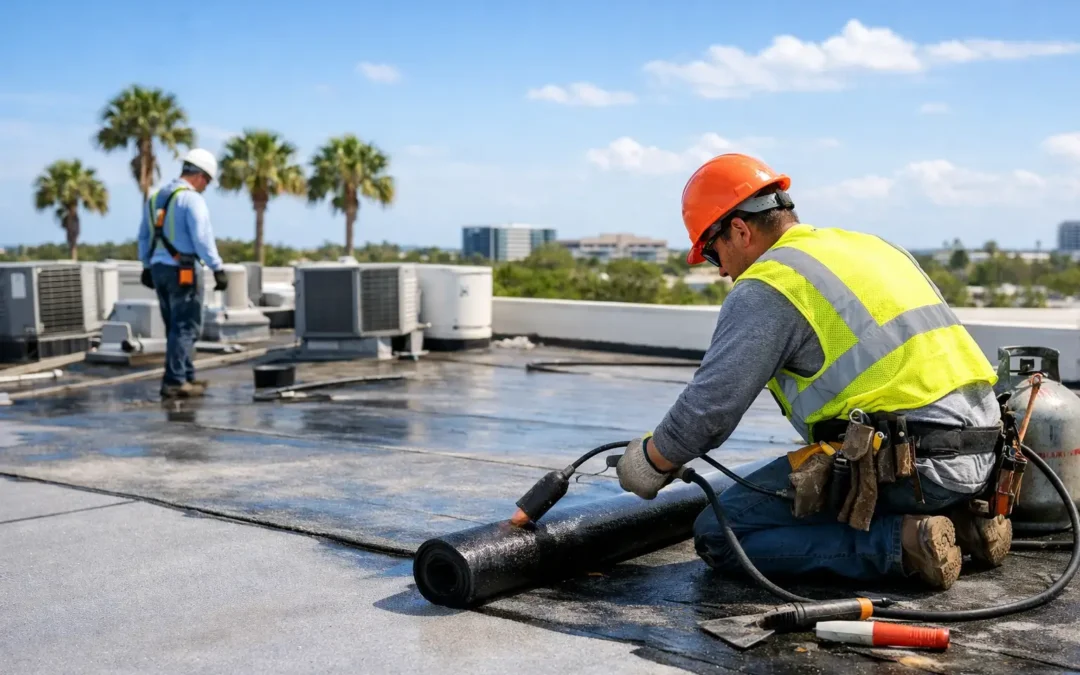
A water stain on a ceiling tile or a small drip near an HVAC unit can quickly become a business interruption. In Northeast Florida, commercial flat roof repair is often the difference between containing a manageable defect and dealing with damaged inventory, wet insulation, tenant complaints, or mold concerns. Strong sun, afternoon downpours, standing water, and hurricane-driven wind all place real demands on low-slope roofing systems.
The right response is not always a full replacement. A qualified inspection can identify whether the issue is isolated, whether moisture has spread beneath the membrane, and whether repairs can provide reliable protection for years to come. Property owners and managers need clear answers, honest recommendations, and work that respects the building, its occupants, and its daily operations.
Why Florida Flat Roofs Need Close Attention
A commercial flat roof is not truly flat. It is built with a slight slope that moves water toward drains, scuppers, or gutters. When drainage is blocked, the roof surface has settled, or the system was not detailed properly around penetrations, water can remain in place long after a storm. That standing water adds weight and gradually exposes weaknesses in seams, flashing, and membrane surfaces.
Florida heat creates another challenge. UV exposure can dry, crack, or degrade roofing materials over time, particularly on older modified bitumen and built-up roof systems. Daily expansion and contraction also stress seams and transitions around vents, skylights, curbs, pipes, and rooftop equipment.
Then there is wind. A storm does not need to remove an entire roof to cause trouble. Wind can lift membrane edges, loosen coping, damage flashing, or drive rain into a small opening that would not leak during a typical shower. By the time water appears inside, the source may be several feet away from the visible stain.
Signs Your Building May Need Commercial Flat Roof Repair
Leaks are the clearest warning sign, but they are not the only one. A roof should be evaluated when you see recurring ponding water more than 48 hours after rainfall, cracked or open seams, blistering, worn membrane areas, loose flashing, or deteriorated sealant around rooftop units.
Inside the building, watch for stained ceiling materials, bubbling paint, musty odors, damp insulation, and unexplained increases in humidity. These symptoms may signal that moisture is moving through the roof assembly. Waiting for a larger leak can turn a relatively focused repair into a more involved restoration project.
Property managers should also pay attention to maintenance history. If repairs are becoming frequent, occurring in several areas, or addressing the same problem repeatedly, the system may be nearing the point where replacement is the more cost-conscious decision.
What a Professional Roof Inspection Should Determine
Good commercial flat roof repair begins with diagnosis, not a tube of sealant. A professional contractor should inspect the membrane, seams, drains, perimeter edges, flashings, penetrations, and transitions around rooftop equipment. The goal is to find both the visible defect and the conditions that allowed it to develop.
An inspection should also consider the roof’s age, material type, prior repairs, drainage performance, and likely moisture beneath the surface. Depending on the situation, moisture-detection methods may help determine whether insulation or decking has been affected. This matters because patching the top surface alone will not solve a problem caused by saturated materials below it.
The best repair scope is specific. It should explain where the roof is compromised, what work is recommended, what materials will be used, and what limitations exist. That transparency allows owners to make decisions based on the roof’s condition rather than pressure or guesswork.
Common Commercial Flat Roof Repairs
The correct repair depends on the roofing system and the source of water intrusion. On single-ply systems such as TPO, PVC, or EPDM, repairs may involve cleaning and patching punctures, heat-welding new membrane material, or correcting seam failures. These systems can perform very well when repairs are compatible with the existing membrane and installed with careful surface preparation.
Modified bitumen and built-up roofs may need damaged sections removed and replaced, reinforced flashing added, or deteriorated surfacing restored. In some cases, a coating can be part of a repair strategy, but coatings are not a cure-all. The roof must be clean, dry, structurally sound, and properly repaired before a coating is applied. A coating cannot correct trapped moisture, failing insulation, or widespread membrane breakdown.
Drainage corrections can be just as important as membrane repairs. Cleaning drains is basic maintenance, but persistent ponding may call for changes to drains, scuppers, tapered insulation, or localized slope. When water has no reliable path off the roof, even quality materials face unnecessary stress.
Flashing and Penetrations Deserve Special Attention
Many flat roof leaks begin at details rather than in the open field of the roof. HVAC curbs, plumbing vents, exhaust fans, skylights, parapet walls, and edge metal all interrupt the roofing surface. Each transition needs compatible flashing and a watertight connection that can tolerate movement.
Repairs around these areas require more than adding caulk. Sealant may be appropriate as one part of a properly designed repair, but it should not be used to hide open seams, failed flashing, or damaged membrane. Professional workmanship at these vulnerable points protects the roof system where it is most likely to fail.
Repair or Replacement: How to Make the Right Call
Commercial roof repair makes sense when damage is localized, the existing system is still within its useful service life, and the underlying insulation and deck remain dry and sound. A timely repair can protect the building, preserve the remaining life of the roof, and help owners plan future capital expenses without an emergency deadline.
Replacement becomes more practical when leaks are widespread, repairs are recurring, the membrane is brittle or extensively deteriorated, or moisture has spread through insulation. A roof nearing the end of its service life can absorb repair dollars without delivering dependable long-term protection. In that situation, continuing to patch may cost more over time than investing in a properly designed replacement.
Budget matters, but it should not be the only factor. Consider the consequences of failure for the building. A medical office, retail space, warehouse with inventory, apartment property, or facility with sensitive equipment may have very different risk levels. The right choice balances immediate cost, remaining roof life, operational disruption, warranty options, and the value of avoiding water damage.
Protecting Your Roof Between Repairs
A preventative maintenance plan gives property owners a clearer view of roof condition before a leak forces a rushed decision. Regular inspections, especially before hurricane season and after major storms, can catch loose edge metal, blocked drainage, damaged flashing, and early membrane wear.
Building staff can help by keeping unauthorized foot traffic off the roof, reporting interior stains promptly, and making sure drains are not blocked by leaves, debris, or loose materials. Contractors servicing HVAC equipment should also avoid leaving sharp objects, fasteners, or discarded materials behind. Small punctures can become expensive if they are not found quickly.
Documenting inspections and repairs is equally useful. A clear history helps identify recurring issues, supports warranty discussions when applicable, and gives future decision-makers an accurate picture of the roof’s performance.
A Dependable Partner for Florida Weather
Commercial roofing work should be planned around building operations whenever possible. That may mean coordinating access with tenants, protecting work areas, scheduling around weather, and communicating clearly about temporary protection if storms are approaching. For active leaks or wind damage, prompt emergency measures can limit water intrusion while a lasting repair plan is prepared.
Stonebridge approaches commercial roofing as building protection, not a quick patch. A thorough evaluation, professional-grade materials, and careful attention to roof details help property owners make decisions with confidence. If your roof is showing early warning signs, addressing them before the next heavy rain can protect your property, your operations, and the people who depend on both.