A roof can look fine from the driveway and still have weakened flashing, aging underlayment, storm-lifted shingles, or small leaks working behind the scenes. That is why a guide to choosing roofers should start with more than price. For Jacksonville-area homeowners and property owners, the right contractor is the one prepared to protect the building through heavy rain, intense sun, humidity, and high winds.
Roofing is a major investment, but it is also a line of defense for your family, tenants, business operations, and property value. Choosing carefully before work begins can help prevent rushed repairs, surprise costs, and warranty problems later.
Start With Credentials That Can Be Verified
A professional roofer should be willing to provide clear proof of licensing, insurance, and qualifications. Do not rely on a yard sign, a truck logo, or a social media post as proof that a contractor is equipped to handle your project.
Ask whether the company carries appropriate liability insurance and workers’ compensation coverage. This matters because roofing is skilled, high-risk work. If an uninsured worker is injured on your property or the installation causes damage, a homeowner could face an avoidable financial headache.
Manufacturer credentials deserve attention as well. Certain manufacturers authorize select contractors to install their roofing systems and offer enhanced warranty options. GAF Master Elite® certification, for example, is held by fewer than 2% of roofing companies nationwide. It reflects ongoing training, a proven business record, and a commitment to installation standards required by the manufacturer.
Credentials do not automatically make one proposal the right choice, but they create a useful baseline. A contractor who is transparent about qualifications is more likely to be accountable when questions arise during or after the project.
Use This Guide to Choosing Roofers Beyond the Lowest Bid
A low estimate can be appealing, especially after an unexpected leak or storm event. Yet a price that sits far below every other proposal often means something has been left out. The difference may be in material quality, labor coverage, ventilation work, tear-off requirements, flashing details, cleanup, or permit handling.
A trustworthy written estimate should explain what the contractor plans to do, not simply provide one large number. Review the type of roofing material, the scope of tear-off, underlayment, flashing, edge protection, ventilation, decking repairs, disposal, and warranty coverage. If a contractor cannot explain those items in plain language, that is a reason to slow down.
For Florida roofs, the details beneath the visible shingles or tiles matter greatly. Underlayment, properly installed flashing, secure fastening, and ventilation all influence how the roof performs during driving rain and prolonged heat. Two roofs may look similar on completion day, but their long-term performance can be very different.
It is reasonable to compare several estimates. Compare them line by line, however, rather than choosing based on the bottom number alone. A complete proposal may cost more upfront while offering stronger materials, better workmanship protections, and fewer costly surprises down the road.
Ask How the Contractor Plans for Florida Weather
Northeast Florida properties face a specific mix of weather pressure: hurricane-season winds, wind-driven rain, humid conditions, blazing summer heat, and sudden afternoon storms. A roofing contractor should understand how those conditions affect the system selected for your home or commercial building.
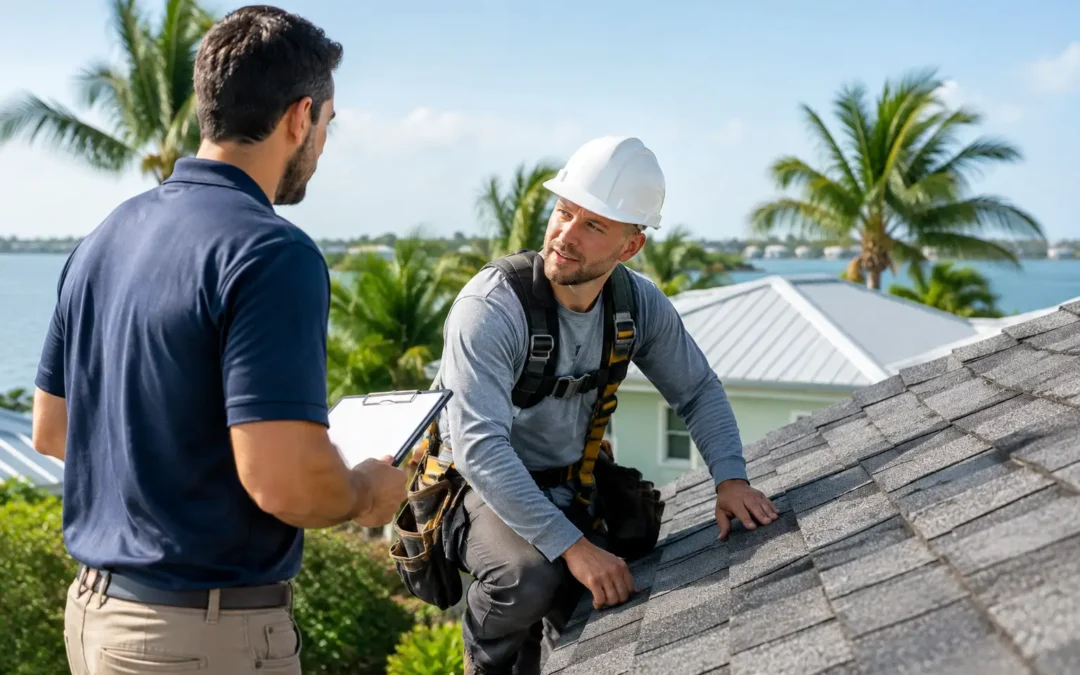
Ask practical questions. How will the roof be protected if rain arrives during the project? What underlayment and flashing approach will be used? How are vents, chimneys, skylights, walls, and valleys handled? If damaged decking is found, how will the contractor document it and price the repair?
There is no one material that is ideal for every property. Architectural shingles may be an excellent fit for many homes, while concrete or clay tile, metal, low-slope systems, or commercial membranes may better suit other structures. The right recommendation depends on roof slope, existing construction, neighborhood requirements, budget, desired appearance, and long-term maintenance expectations.
Be cautious if a contractor recommends the same system for every building without inspecting the roof carefully. Good advice is specific to the property and its condition.
Look for Clear Communication Before You Sign
The way a roofing company communicates before the job often signals what the project experience will be like. You should know who your main contact will be, when work is expected to begin, how changes are approved, and what happens if weather causes a delay.
A dependable contractor will inspect the roof, explain the findings, and answer direct questions without pressure. They should also be honest when a repair is practical and when replacement is the more responsible long-term choice. Not every aging roof needs immediate replacement, but repeated leaks, widespread material failure, and storm-related damage can make continued repair a poor investment.
Pay attention to whether the company puts promises in writing. Verbal assurances are helpful, but the proposal and contract should identify the scope of work, payment schedule, materials, warranty information, and responsibilities for permits and cleanup. Never feel rushed to sign a contract because a contractor claims the price is available only that day.
Check Workmanship, Reviews, and Local Experience
Online reviews can provide useful perspective, especially when they describe how a company handled communication, cleanup, warranty concerns, or unexpected repairs. Look beyond the star rating. Read recent comments and notice whether the contractor responds professionally when a customer has a concern.
Project photos can also help, but ask whether the company can describe the work behind the finished appearance. A clean-looking roof is only part of the job. Proper flashing, ventilation, water management, and protection of landscaping and exterior surfaces are equally important.
Local experience is especially valuable after a major storm. Companies that know Jacksonville, St. Augustine, Ponte Vedra, Fernandina Beach, Green Cove Springs, Palm Coast, and surrounding Florida communities understand the urgency of emergency tarping and leak response. They are also more likely to remain available after the storm-chasing contractors have moved to the next market.
For larger commercial and multi-family properties, ask about similar completed work. These projects often require careful scheduling, occupant communication, phased installation, and a plan for minimizing disruption. The contractor should be able to discuss those operational details with confidence.
Understand Warranties Before They Matter
A roof warranty is valuable only when you understand what it covers. Manufacturer warranties generally relate to the roofing materials, while workmanship warranties address the contractor’s installation. Both matter, and neither should be treated as an afterthought.
Ask who stands behind the workmanship, how long that coverage lasts, and what process you should follow if a problem appears. Ask whether the manufacturer warranty requires registered installation, specific components, or work performed by an authorized contractor.
It also helps to understand exclusions. Damage from severe weather, lack of maintenance, altered roof penetrations, or pre-existing structural issues may not be covered in the same way as a material defect. A reputable roofer will explain the differences clearly rather than using the word “warranty” as a vague selling point.
Know What a Professional Job Site Looks Like
Roof replacement is disruptive, but it should not feel chaotic. Before work begins, ask how the crew will protect landscaping, driveways, windows, pools, and outdoor equipment. Confirm where materials will be delivered, where debris will be placed, and how the property will be cleaned for loose nails and roofing waste.
Professional crews also maintain a safe job site. That includes organized material staging, careful debris removal, and a clear plan for protecting the interior if a weather interruption occurs. If you have pets, children, tenants, or employees on-site, discuss access and safety expectations before the first truck arrives.
Stonebridge approaches roofing as long-term exterior protection, not a quick transaction. That standard should guide any contractor you consider: clear scope, qualified installation, quality materials, and accountability after the final cleanup.
When you are ready to choose, give yourself room to ask questions and compare complete proposals. The best roofer is not simply the first one available or the least expensive one. It is the professional who can show you how your roof will be built, how your property will be protected during the work, and how they will stand behind the result when Florida weather puts it to the test.