
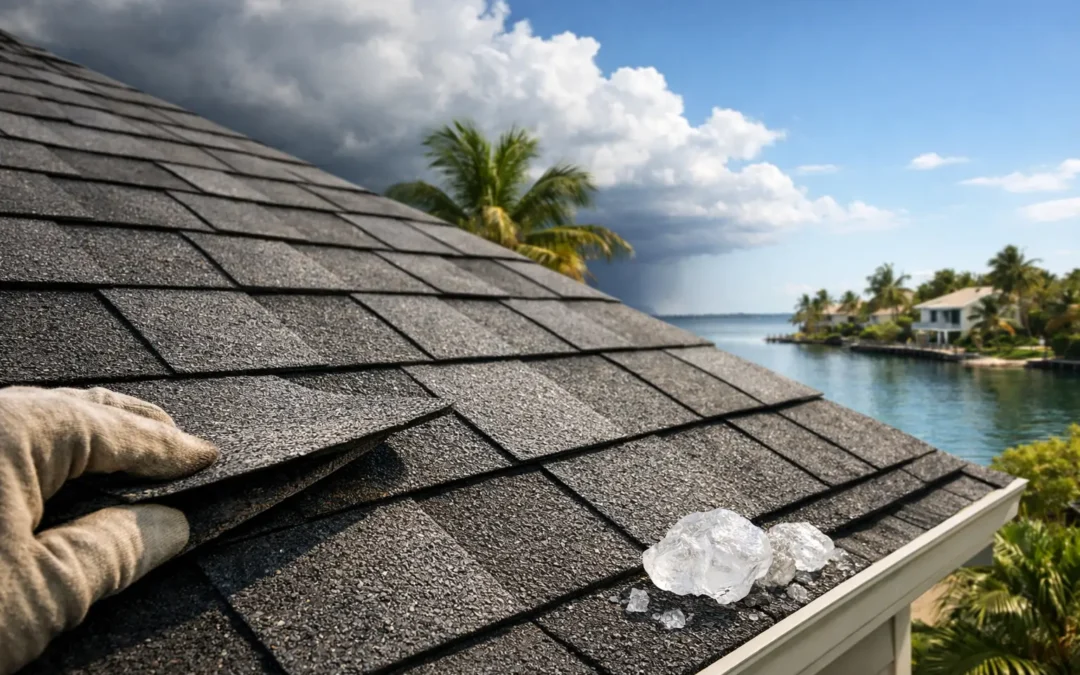
A roof can look perfectly sound after a Florida storm and still carry damage that shortens its life. Hail can bruise asphalt beneath the surface, while wind-driven debris can crack or dislodge shingles without creating an immediate leak. This guide to impact resistant shingles helps Jacksonville-area homeowners understand what these products do, what they do not do, and whether they make sense for a roof replacement.
What Are Impact Resistant Shingles?
Impact resistant shingles are asphalt shingles designed and tested to better withstand strikes from hail and airborne debris. They typically use a reinforced asphalt layer, a tougher backing, or a specialized polymer-modified construction that helps the shingle flex rather than crack when struck.
For Northeast Florida homes, the appeal is straightforward: a more damage-tolerant roof may be better prepared for severe thunderstorms, tropical systems, falling limbs, and the occasional hail event. It can also reduce the likelihood that a single impact causes granule loss, fractures, or exposed areas that become vulnerable over time.
The key word is “resistant,” not “proof.” No shingle can guarantee protection from every storm condition. A large branch, prolonged hurricane-force winds, or debris traveling at high speed can damage even a premium roofing system. The goal is to choose materials that offer a stronger first line of defense when weather becomes unpredictable.
Understanding Impact Ratings: Why Class 4 Matters
Most impact resistant asphalt shingles are evaluated under UL 2218, a test that assigns ratings from Class 1 through Class 4. During the test, steel balls are dropped onto the shingle to simulate hail impact. Class 4 is the highest rating and is generally the level homeowners should look for when impact performance is a priority.
A Class 4 rating means the tested product did not crack under the required test conditions. That is meaningful, but it should not be confused with a wind rating, a waterproofing guarantee, or a promise that the roof will never need repair. A roof is a complete system. Shingles, underlayment, flashing, fasteners, ventilation, and installation quality all affect how it performs in real weather.
It also matters that the specific shingle color and product line carry the rating. Manufacturers may offer both standard and impact resistant versions within a similar-looking architectural shingle collection. Review the exact product specification before making a decision rather than relying on a broad product name.
Impact Resistance Is Different From Wind Resistance
Florida homeowners often focus first on wind, and for good reason. Impact resistance and wind resistance address different threats. Wind ratings relate to how well shingles resist lifting and blowing off when installed according to the manufacturer’s requirements. Impact ratings address cracking or puncturing from an object striking the shingle.
A strong roofing decision considers both. For a home in Jacksonville, St. Augustine, Ponte Vedra, Fernandina Beach, Palm Coast, or elsewhere along the Florida coast, a shingle with a high impact rating and a wind-rated installation system can provide more balanced storm protection than choosing based on one specification alone.
When Impact Resistant Shingles Are Worth the Investment
Impact resistant shingles often cost more than standard architectural shingles, so the right choice depends on your home, budget, and long-term plans. They can be especially worthwhile if your property has mature trees, has experienced hail or debris damage before, or sits in an area where storm exposure is a regular concern.
They may also appeal to homeowners who plan to stay in the home for many years and want to invest in fewer preventable repairs. A roof replacement is not simply a cosmetic update. It protects your family’s most valuable asset, supports indoor comfort, and helps defend the structure beneath it from water intrusion.
There are cases where a standard, high-quality architectural shingle is still a sound choice. If the roof has limited tree exposure, the budget is tightly defined, or the home will be sold soon, a standard system installed correctly may deliver the value you need. The best material is the one that fits the property’s risks and is installed without shortcuts.
Questions to Ask About Insurance Savings
Some insurance carriers offer discounts for qualifying Class 4 impact resistant roofs, but discounts are not automatic and vary by insurer, policy, home location, and underwriting requirements. Before selecting shingles solely for a potential premium reduction, contact your insurance agent and ask what documentation is required.
You may need the product’s impact classification, manufacturer documentation, a paid invoice, photos, or a contractor-completed form. Ask whether the discount applies to the full premium or only a portion of the policy, how long it remains in place, and whether your deductible affects the practical benefit after a loss.
It is also wise to compare the added material cost with the expected savings over several years. Insurance savings can help offset the investment, but they should be treated as one part of the decision – not the only reason to choose an impact resistant roof.
A Guide to Impact Resistant Shingles and Proper Installation
The performance label on a shingle matters, but the crew installing it matters just as much. Even a Class 4 product can underperform if nails are misplaced, flashing is poorly integrated, roof decking has hidden damage, or the underlayment system is not suited to the roof’s design.
During a roof replacement, a qualified contractor should assess the deck condition, roof slope, penetrations, valleys, eaves, and ventilation needs. These details determine where water moves, where wind pressure concentrates, and where extra protection may be needed. Florida roofs also benefit from careful attention to sealing at transitions around chimneys, skylights, walls, and plumbing vents.
Ask your contractor how the roofing system will be built, not just which shingle will be installed. A clear proposal should identify the shingle product, underlayment, starter shingles, ridge components, flashing approach, ventilation plan, and warranty options. It should also explain how the crew will protect landscaping, manage debris, and address unforeseen deck repairs if they are discovered.
Stonebridge approaches roof replacements as complete protection systems, pairing proven materials from established manufacturers with trained installation practices built for Florida weather. As a GAF Master Elite® contractor, the team can also discuss enhanced warranty options available through qualifying GAF roofing systems.
How to Compare Shingle Options
When comparing impact resistant products, look beyond the color board. Bring the same questions to each option so you can make a fair comparison:
- What is the shingle’s exact UL 2218 impact classification?
- What wind coverage applies when it is installed as specified?
- Is the product approved for potential insurance discounts by your carrier?
- What manufacturer warranty and workmanship coverage are available?
- How does the material complement your home’s style, roof pitch, and budget?
Appearance still has value. Architectural shingles can add depth and curb appeal, while the right color can complement siding, brick, stucco, or exterior paint. But a good-looking roof should also be equipped for the conditions it will face year after year.
Do Not Wait for a Leak to Inspect Storm Damage
After a severe storm, look for missing tabs, lifted shingles, fresh granules in gutters, damaged vents, loose flashing, or limbs resting on the roof. From the ground, you may also notice dark spots, irregular edges, or debris that was not there before. Avoid climbing onto the roof yourself, especially if the surface is wet or damage is suspected.
A professional inspection can identify whether an impact has affected only a few shingles or whether the roofing system needs broader repair. Early attention can prevent a small compromised area from becoming a leak that damages insulation, ceilings, walls, or electrical components.
If you are planning a replacement, do not choose a shingle based on its impact rating alone. Choose a system that matches your exposure, your insurance requirements, and the standard of workmanship your home deserves. The right roof should give you confidence when the forecast changes, not leave you wondering what the next storm will reveal.