
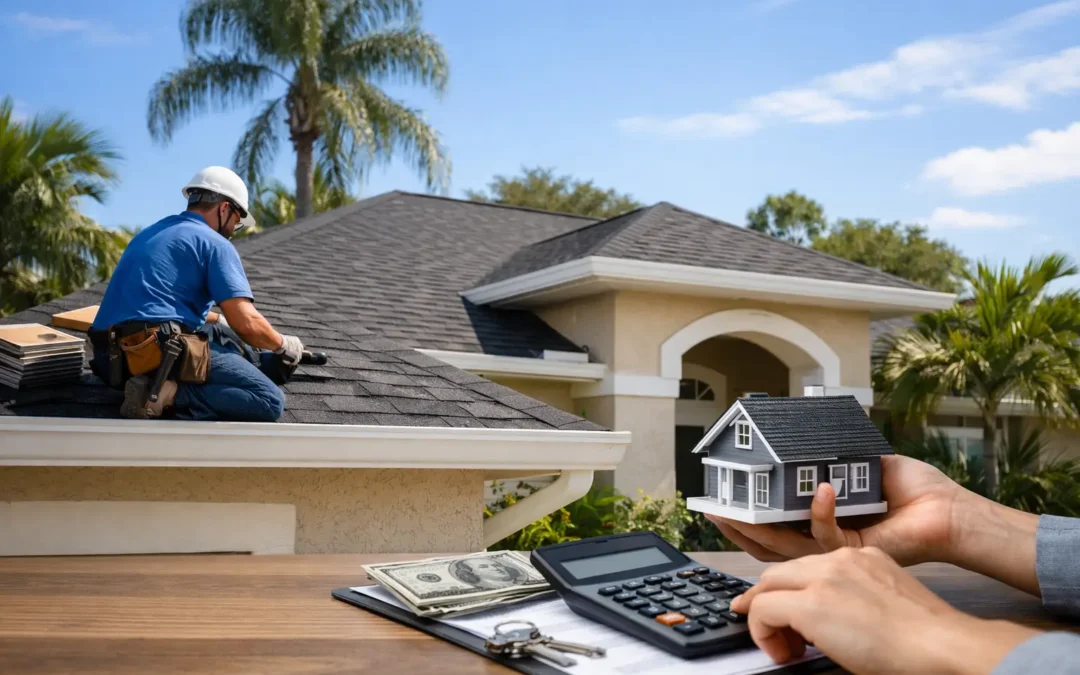
A roof rarely fails at a convenient time. A leak after a hard Jacksonville downpour, shingles lifted by wind, or a roof that has simply reached the end of its service life can demand action before savings are fully in place. Understanding how roof financing works can help you protect your home without rushing into a decision or settling for lower-quality work.
Roof financing is not a one-size-fits-all solution. The right option depends on the scope of work, your budget, your credit profile, whether insurance is involved, and how long you plan to stay in the property. The goal is straightforward: make a necessary roofing investment manageable while keeping the total cost and monthly payment clear from the beginning.
How Roof Financing Works, Step by Step
Most roofing financing begins after a professional inspection and written estimate. Before you apply for anything, you need to know what the project actually requires. A dependable estimate should identify the roofing system, materials, tear-off or repair needs, ventilation, flashing, underlayment, permit requirements, and any related exterior work that affects the final price.
Once you have a project amount, you can apply for financing through a lender, your bank or credit union, a home equity product, or a contractor financing program. Applications commonly ask for identifying information, income details, housing costs, and authorization to review your credit. Some lenders offer a prequalification process that may provide an estimated offer before a full credit decision.
If you are approved, the lender will present the available terms. These typically include the financed amount, annual percentage rate or APR, loan term, monthly payment, and any origination fee or other charges. Review those details carefully. A low monthly payment can be helpful, but a longer term may increase the total amount paid in interest.
After you accept the agreement, the contractor can schedule work according to the lender’s funding process and the project contract. Depending on the program, funds may be paid directly to the contractor, released in stages, or sent to the homeowner. You then repay the lender in regular monthly installments. Your contract for the roof and your loan agreement are related, but they are separate documents, so both deserve close attention.
Common Ways to Finance a Roof
Installment loans are often used for roof replacements because they provide a fixed loan amount and a defined repayment schedule. With a fixed-rate loan, your monthly payment stays the same throughout the term. That predictability can be valuable for homeowners budgeting around other expenses.
A home equity loan or home equity line of credit may offer competitive rates for homeowners who have built sufficient equity. These products use your home as collateral, which can make the terms attractive but also raises the stakes if payments become difficult. They can take longer to arrange than an unsecured personal loan, so they may not be the best fit when active leaks or storm damage require immediate attention.
Credit cards can work for smaller repairs, deductibles, or short-term gaps, particularly if you have a promotional rate and a realistic plan to pay the balance before that promotion expires. They are usually a more expensive long-term choice if a high balance carries over at standard interest rates.
Contractor-supported financing programs can simplify the process because the financing conversation happens alongside the roofing estimate. That convenience does not eliminate the need to compare terms. Ask who the lender is, whether the rate is fixed, when payments begin, whether there are fees, and whether early payoff is allowed without a penalty.
What Your Monthly Roof Payment Depends On
Your payment is driven by more than the price on the estimate. Loan amount, interest rate, term length, fees, and the size of your down payment all matter. Financing $15,000 over three years will create a much different payment than financing the same amount over 10 years, even if the longer term feels easier month to month.
APR is one of the most useful numbers to compare because it reflects the interest rate and certain financing costs. Two offers with similar monthly payments may have very different APRs and total repayment amounts. Ask for a clear payment schedule that shows what you will pay each month and what the loan will cost over its full term.
Promotional offers also require careful reading. A true 0% interest offer is different from deferred interest. With deferred interest, interest may be added retroactively if the balance is not paid in full by the promotional deadline. If that deadline is not realistic for your household budget, a standard fixed-rate loan may be the more transparent choice.
Financing a Roof When Insurance Is Involved
Insurance and financing can work together, but they serve different purposes. Homeowners insurance may cover qualifying sudden damage from a covered event, subject to your policy terms, deductible, depreciation rules, and insurer approval. It generally does not pay for normal aging, deferred maintenance, or every condition discovered during an inspection.
If a storm has damaged your roof, begin by documenting the issue and reporting the claim promptly. Temporary protection, such as emergency tarping, may be necessary to limit further water intrusion while the claim is evaluated. Keep copies of the estimate, insurer correspondence, photos, and payment information.
Financing may help cover a deductible, upgrades not included in the claim, or the gap between insurance payments and the full scope of needed work. Do not assume insurance proceeds will arrive on the same schedule as construction. Discuss timing with both your contractor and lender so you understand when deposits, progress payments, or monthly loan payments are due.
Be wary of any contractor who pressures you to sign paperwork before explaining the estimate, financing terms, and insurance-related responsibilities. A reputable roofing partner should be clear about what insurance may cover, what remains your responsibility, and what work is included in the contract.
Florida-Specific Decisions That Affect the Project Cost
In Northeast Florida, a roof is not just a cosmetic upgrade. It is a primary defense against intense sun, heavy rain, humidity, wind-driven water, and hurricane-season conditions. The lowest initial estimate may not account for the full system needed to protect the home over time.
For example, a replacement may require damaged decking repairs, improved ventilation, upgraded underlayment, code-related work, or flashing corrections around chimneys, walls, and penetrations. Material selection also matters. Architectural shingles, tile, metal, and solar-integrated roofing systems have different upfront costs, expected performance characteristics, and installation requirements.
If you are considering solar, it may be worth planning the roof and energy upgrade together rather than installing a new roof now and reworking it later for a separate solar project. Integrated options such as GAF Timberline Solar™ shingles can affect the financing amount and timeline, but they may also simplify planning for homeowners who want to improve both roof protection and energy production.
Stonebridge helps homeowners evaluate roofing, exterior, and solar projects with the Florida conditions and long-term protection needs in mind. A detailed estimate gives you a more reliable number to finance than a quick price based only on square footage.
Questions to Ask Before You Sign
Before accepting any financing offer, ask for the total project price, the amount being financed, the APR, payment amount, repayment term, and total cost if you make every scheduled payment. Confirm whether there is a down payment, an origination fee, a late fee, a prepayment penalty, or a promotional rate that can change.
You should also ask practical construction questions. When will materials be ordered? What happens if hidden damage is discovered after tear-off? How are approved change orders handled? Which manufacturer warranty applies to the materials, and what workmanship coverage is included? Financing can make the investment attainable, but it does not replace the value of a clear contract and proven installation standards.
Avoid borrowing more than the scope requires simply because you qualify for a larger amount. At the same time, do not cut essential waterproofing details, ventilation, or properly specified materials just to reduce the payment. A roof is expected to perform through years of Florida weather, and the cheapest short-term choice can become the more expensive one if it leads to repeat repairs.
A well-planned financing decision should leave you with two things: a payment that fits your household budget and a roofing system you can trust when the next hard rain moves in.