
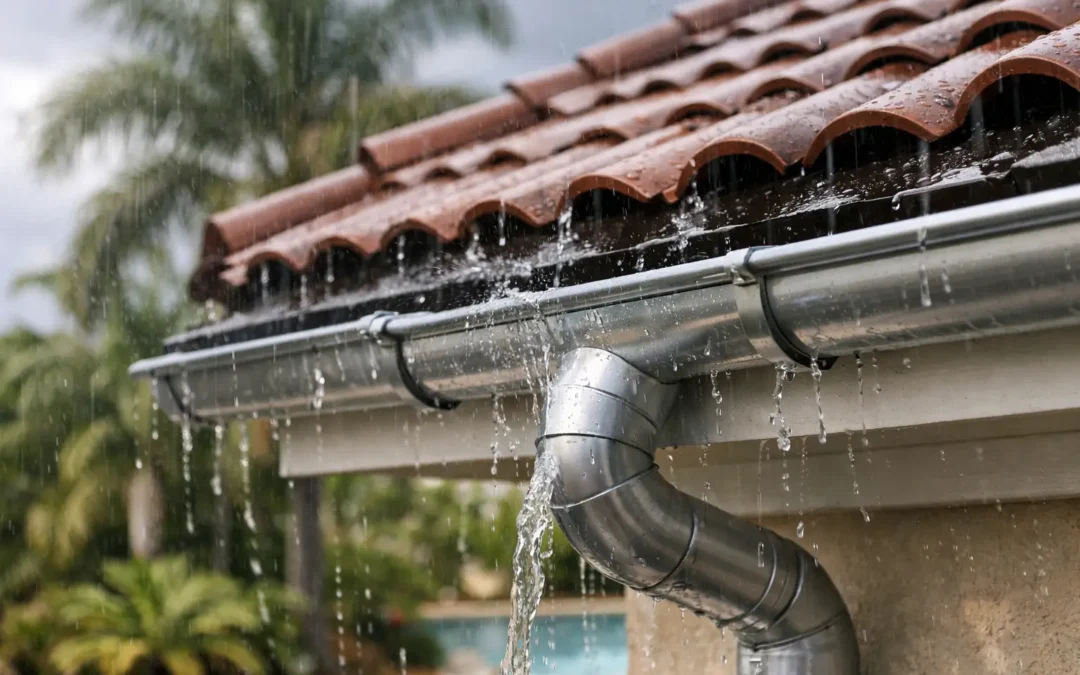
A Jacksonville downpour can expose a drainage problem in minutes. Water spilling over gutters, pooling beside the foundation, or backing up beneath shingles is more than a nuisance – it can lead to leaks, wood rot, staining, and costly exterior repairs. Knowing how to improve roof drainage helps protect the roof system, the structure below it, and your family’s most valuable asset during Florida’s heaviest rain.
Roof drainage is not only about adding bigger gutters. It is a complete path that moves water from the roof surface into gutters or drains, through downspouts, and safely away from the home or commercial building. A problem at any point in that path can leave water where it does not belong.
Start With the Signs of Poor Roof Drainage
Many drainage issues are visible from the ground. During or shortly after a storm, look for water pouring over the front edge of gutters, gutters that sag or pull away from the fascia, and downspouts releasing water directly beside the house. Persistent puddles near exterior walls, washed-out mulch beds, peeling paint, and mildew on soffits can also point to runoff that is not being controlled.
Inside, check for ceiling stains, damp attic insulation, musty odors, or wet framing around roof penetrations. These signs do not always mean the roof covering has failed. On a low-slope roof, standing water can be a drainage design concern. On a steep-slope shingle or tile roof, clogged gutters, damaged flashing, or blocked valleys may be directing water where it should not go.
Florida homeowners should take these warnings seriously. Intense rain, wind-driven storms, pine needles, oak leaves, and year-round humidity create conditions that can turn a small blockage into a leak quickly.
How to Improve Roof Drainage at Every Stage
The best solution depends on the roof’s size, slope, material, and surrounding landscape. A simple gutter cleaning may solve one home’s overflow problem, while another property may need redesigned downspouts, roof repairs, or professional correction of low spots.
Keep gutters and roof valleys clear
Gutters cannot carry water if they are packed with leaves, shingle granules, twigs, or roof debris. Clean them at least twice a year, and more often if mature trees hang over the roof. In Northeast Florida, it is wise to inspect after tropical systems and periods of heavy wind, even if the gutters were recently cleaned.
Do not overlook roof valleys. These angled channels collect a large amount of runoff and debris. When leaves build up in a valley, water can slow down, move sideways beneath shingles, or overwhelm the gutter at the bottom. Cleaning should be done carefully from a stable ladder or by a trained professional. Walking on a roof can damage materials and presents a real fall risk.
Gutter guards can reduce the amount of debris entering the system, but they are not maintenance-free. Some guards work well with certain tree cover and roof configurations, while others may allow fine debris or shingle grit to collect. The right choice depends on the home, not a one-size-fits-all product claim.
Make sure gutters are sized and pitched correctly
A gutter may look intact yet still fail during hard rain because it is too small or improperly installed. Standard residential gutters are often adequate for modest roof sections, but large roof planes and steep slopes can send a concentrated volume of water into one area. Wider gutters or larger-capacity downspouts may be appropriate where repeated overflow occurs.
Gutters also need a gradual pitch toward the downspout. If they are level, pitched the wrong way, or sagging between hangers, water may sit in the channel instead of draining. Standing water adds weight, strains fasteners, encourages corrosion, and can eventually pull the gutter away from the fascia.
A qualified roofing or exterior professional can measure the roof drainage area and evaluate whether the current system can handle local rainfall. This is particularly valuable when planning a roof replacement, because drainage improvements are easier to coordinate while fascia, flashing, and roof edges are accessible.
Add or relocate downspouts where water concentrates
A common problem is having too few downspouts for the amount of water a roof sheds. If water always spills over at one end of a gutter, the issue may not be a clog. That section may simply need another downspout or a larger outlet to move water fast enough.
Downspouts should discharge away from the foundation. Short extensions can help, but the goal is to carry water far enough that it does not saturate soil beside the building. Splash blocks, buried drain lines, and properly graded swales can all be part of the solution. The best option depends on lot size, soil conditions, landscaping, and local drainage patterns.
Avoid directing roof runoff toward a neighbor’s property, a driveway that becomes slippery, or an area where water can flow back toward the home. If an underground line is used, it should be sized correctly and kept clear. A hidden blockage can be just as damaging as an overflowing gutter.
Correct grading and protect the foundation line
Even a well-functioning gutter system cannot protect a foundation if the surrounding grade slopes toward the house. Soil, mulch, and landscaping should guide water away from exterior walls. Over time, settling soil and repeated rain can create shallow channels that send runoff directly back to the building.
Look for low spots near downspouts and air-conditioning pads, especially after a storm. Regrading may be needed if water remains against the foundation for more than a short period. Keep mulch and soil below siding and weep holes so water has a clear path out rather than becoming trapped against the wall system.
For commercial properties, drainage planning may involve roof scuppers, interior drains, tapered insulation, and larger site-drainage considerations. Ponding water on a low-slope commercial roof should be assessed promptly, particularly when it remains long after rain has stopped. Weight from standing water and prolonged moisture exposure can shorten the life of roofing materials.
Address Roof Conditions That Interrupt Water Flow
Sometimes the drainage system is doing its job, but the roof is not. Missing shingles, cracked tiles, lifted flashing, loose ridge caps, deteriorated pipe boots, and damaged valley flashing can all allow water into the roof assembly. These issues are especially vulnerable in wind-driven rain, when water can be pushed uphill or sideways in ways it would not travel during a light shower.
Age matters as well. An older roof may have brittle shingles, worn sealant, exposed fasteners, or granule loss that makes it less forgiving when drainage is less than perfect. If your home has recurring leaks near gutters, valleys, chimneys, skylights, or roof-to-wall transitions, do not assume cleaning alone will resolve it. A professional inspection can separate a maintenance issue from a roofing repair need.
Build Roof Drainage Into Preventative Maintenance
The most dependable drainage systems receive attention before the next major storm. A seasonal inspection can catch loose gutter hangers, corrosion, blocked outlets, deteriorated sealant, and debris accumulation while the repairs are still manageable. Check gutters after hurricane-season storms, and inspect again before the heaviest seasonal rains if tree debris is common around your property.
Homeowners can safely monitor visible conditions from the ground, but repairs involving roof surfaces, high gutters, structural fascia damage, or drainage redesign should be handled by qualified professionals. The lowest bid is not always the best value when water management is involved. Proper fastening, compatible materials, correct flashing, and workmanship that stands up to Florida weather are what protect the home over time.
Stonebridge helps homeowners and property owners evaluate roof condition, drainage-related damage, and practical repairs with a clear understanding of Florida’s weather demands. Whether the answer is maintenance, gutter correction, roof repair, or replacement planning, the right recommendation should fit the building rather than push a larger project than necessary.
A roof should shed water quickly and predictably, even when the forecast calls for another Florida afternoon storm. Addressing the first signs of overflow now can spare your roof, foundation, and interior from the consequences of water taking the wrong path.