
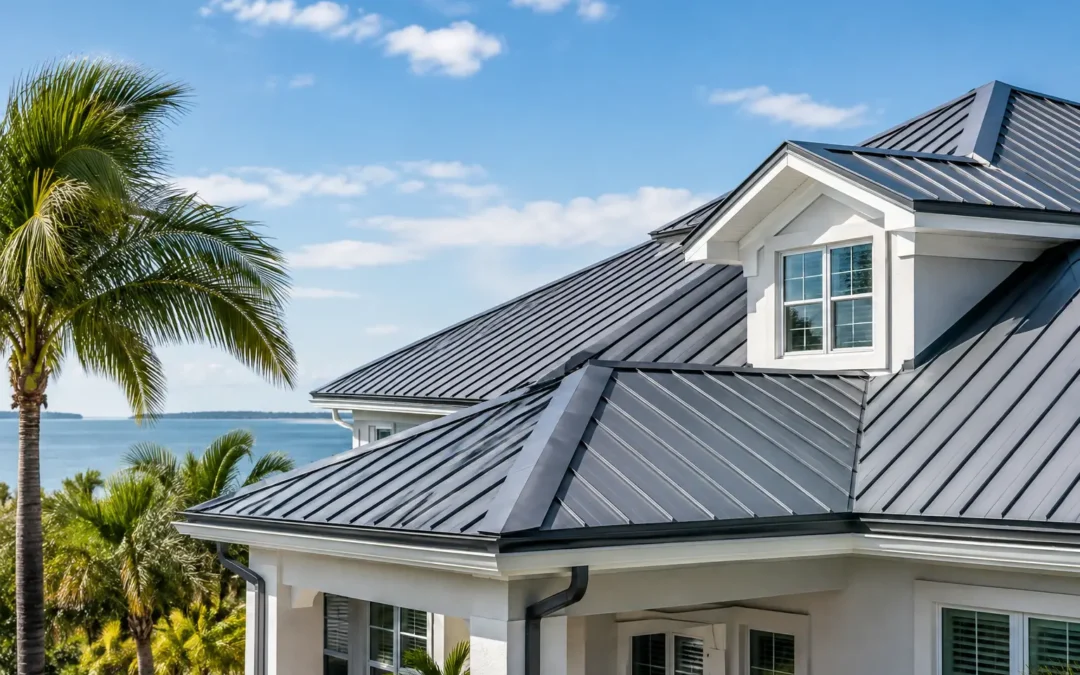
A hurricane does not have to lift an entire roof to cause serious damage. Wind can catch one loose shingle, pry up a weak edge, or force rain beneath compromised flashing. Once water reaches the roof deck or attic, a manageable repair can become a much larger restoration project. The best hurricane roof upgrades address those vulnerable connections before the next named storm is tracking toward Northeast Florida.
For homeowners in Jacksonville, St. Augustine, Ponte Vedra, Fernandina Beach, and across the region, the right upgrade depends on the roof’s age, design, existing condition, and the wind requirements that apply to the property. A stronger roof is not simply about choosing a heavier-looking material. It is a complete system, from the framing and decking below to the fasteners, underlayment, shingles or tile, flashing, and edge protection above.
Best Hurricane Roof Upgrades Start Below the Surface
The roof covering gets most of the attention, but the roof deck is the structural layer that holds the system together. If decking is deteriorated from age, leaks, or moisture exposure, it may not provide a reliable base for new materials and fasteners. During a roof replacement, damaged or questionable decking should be identified and replaced rather than covered over.
A key hurricane-resistance improvement is stronger deck attachment. Properly spaced, corrosion-resistant fasteners help secure the sheathing to roof framing, reducing the chance that wind pressure will pull panels loose. The exact fastening pattern should be determined by the roof structure, local requirements, and the roofing system being installed. This is not a place for a one-size-fits-all approach.
For an existing roof that is otherwise in good condition, access to the decking may be limited. In that situation, a contractor can explain which improvements are practical now and which are best handled during a future replacement. Honest advice matters because not every home needs a full reroof to improve storm readiness, but cosmetic repairs should never be presented as structural protection.
1. Reinforce Roof Decking and Attachment
A well-secured deck creates the foundation for every other hurricane upgrade. Wind moving over a roof creates uplift pressure, especially at corners, ridges, and roof edges. If the deck separates from the framing, even high-quality shingles or tile cannot perform as intended.
During replacement, homeowners should ask how the deck will be inspected, what happens if damaged sheathing is found, and how new or existing decking will be fastened. A clear written scope helps prevent surprises and confirms that the contractor is evaluating the whole roof assembly, not just the visible surface.
2. Install a Secondary Water Barrier
Wind-driven rain is one of Florida’s most persistent storm threats. Even when the roof covering remains largely intact, water can work beneath shingles, tiles, or metal panels after fasteners loosen or flashing shifts.
A self-adhered secondary water barrier provides an added layer of protection at the deck level. It is designed to reduce water intrusion if the outer roof covering is damaged or displaced. This upgrade can be especially valuable for homes near the coast, properties with a history of wind-driven leaks, and roofs approaching replacement age.
It does not make a roof waterproof under every storm condition. No roofing product can guarantee that outcome in a major hurricane. But it can buy valuable protection against interior damage while repairs are arranged after a storm.
3. Upgrade the Roof Edge and Drip Edge
Roof edges are among the first places wind can gain leverage. A properly installed metal drip edge helps direct water away from the fascia and into the gutter system, while also strengthening the perimeter of the roof assembly.
The details matter. Edge metal must be sized, overlapped, and fastened correctly for the system and local wind exposure. It should work with the underlayment and roof covering, not be treated as an afterthought. This is a relatively small component with an outsized role in storm performance.
Homeowners replacing an older roof should not assume existing edge metal can be reused. If it is bent, corroded, undersized, or improperly installed, replacement is often the more dependable choice.
4. Choose Wind-Rated Roofing Materials
The right roof covering should match both the home and Florida’s weather demands. Architectural shingles, concrete or clay tile, and metal roofing can all be durable choices when they are specified for the property and installed according to manufacturer requirements.
Shingle systems should include products rated for the applicable wind conditions, along with compatible starter strips, hip and ridge components, and manufacturer-approved fasteners. Tile roofs require particular attention to attachment methods, underlayment, and flashing because individual pieces can become vulnerable when the supporting system has aged. Metal panels need correct clip or fastener placement, edge details, and penetrations that are properly sealed.
Material selection is not only about wind rating. Weight, roof slope, architectural style, budget, maintenance expectations, and insurance considerations may affect the decision. A product that performs well on one home may not be the best fit for another.
5. Strengthen Flashing Around Vulnerable Areas
Chimneys, walls, valleys, skylights, vents, and plumbing penetrations are common leak points because they interrupt the roof surface. Hurricane winds test every one of those transitions.
Quality flashing work uses properly integrated metal, underlayment, sealants, and fastening methods to move water away from those areas. Caulk alone is not a long-term flashing strategy. Sealant has a role, but it should support a correctly designed detail rather than hide a shortcut.
If a roof has experienced repeated leaks in the same location, the problem may be more than a missing shingle. The flashing design, roof-to-wall transition, or nearby drainage pattern may need a closer evaluation.
6. Improve Attic Ventilation Without Creating Weak Points
Florida attics need ventilation to help manage heat and moisture, but roof vents must also be selected and installed with storm exposure in mind. Poorly secured vents can leak, lift, or allow wind-driven rain into the attic.
The best approach balances ventilation needs with a carefully planned layout and wind-resistant products. A roofing professional should inspect existing ridge vents, box vents, turbines, and other penetrations during a roof assessment. Sometimes the right answer is replacing aged vent components; other times it is improving how they are integrated with the roof system.
7. Protect Gutters, Soffits, and Nearby Exterior Details
A roof cannot shed water effectively if gutters are clogged, loose, or pulling away from the fascia. Before hurricane season, gutters should be cleaned, securely fastened, and checked for proper drainage away from the foundation. Loose soffit panels and damaged fascia should also be repaired, since wind can exploit weak exterior components around the roofline.
Tree maintenance belongs in the same conversation. Limbs that hang over the roof can scrape materials, block drainage, or become impact hazards during a storm. Trimming should be handled thoughtfully to protect both the roof and the health of the tree.
How to Prioritize Hurricane Roof Upgrades
If a roof is nearing the end of its service life, replacement is usually the best time to combine major improvements: decking repairs, enhanced attachment, a secondary water barrier, upgraded edge metal, and a wind-rated roofing system. Completing these elements together allows the components to be installed as an integrated assembly.
If the roof is newer, focus first on documented problems. Missing shingles, cracked tiles, recurring leaks, rusted flashing, loose gutters, and damaged vents deserve prompt attention. Preventative maintenance can extend the useful life of a roof, but it should include a realistic conversation about what a repair can and cannot accomplish in a severe storm.
For multi-family and commercial properties, the same principle applies on a larger scale. Drainage, roof penetrations, edge details, membrane condition, and maintenance records all affect storm performance. Property managers benefit from inspections and repair plans that identify immediate risks before hurricane season compresses contractor availability.
A professional inspection provides the starting point. Stonebridge can evaluate the roof’s current condition, explain practical upgrade options, and provide a clear estimate based on the property’s needs. The goal is not to sell every possible add-on. It is to build the right level of protection for the home or property you are responsible for.
Hurricane preparation is most effective when it happens on a clear day, not after water is already finding its way indoors. A well-planned roof upgrade protects more than shingles and decking – it helps protect the people, belongings, and peace of mind beneath them.