Roof Repair Versus Replacement for Florida Homes
A ceiling stain after a hard Jacksonville rainstorm can make one question feel urgent: should you fix the problem or start over? Roof repair versus replacement is not a decision to make based on a single loose shingle or the lowest initial price. The right answer depends on where the damage is, how much life the roof has left, and whether the system can still protect your home through another Florida storm season.
A professional inspection gives you the facts needed to act with confidence. It separates a repairable issue from a roof that is signaling broader failure, so you can protect your property without paying for work you do not need.
Roof Repair Versus Replacement: Start With the Roof’s Condition
A repair is often the practical choice when damage is limited and the rest of the roof is in sound condition. A few wind-lifted shingles, localized flashing failure around a vent, a small puncture, or a leak confined to one area may be resolved without replacing the entire system. The goal is not simply to stop visible water. It is to restore the roof’s weather barrier, secure vulnerable details, and prevent moisture from reaching decking, insulation, or interior finishes.
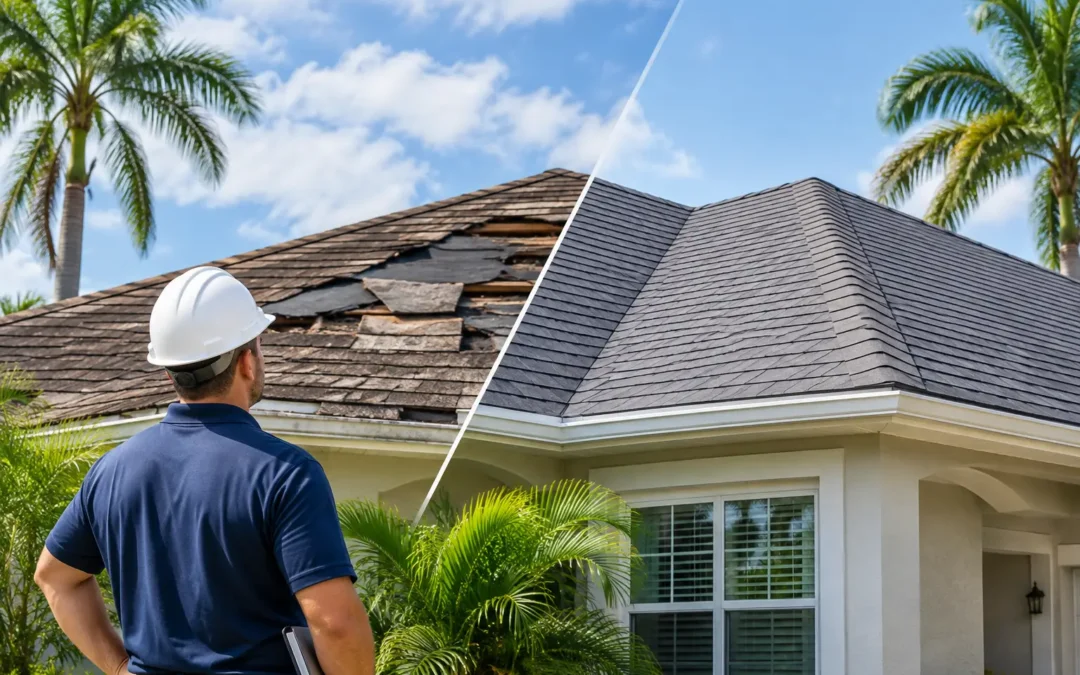
Replacement becomes the stronger investment when problems are widespread or recurring. If repairs are appearing in different areas, shingles are brittle or losing granules across broad sections, tiles are repeatedly slipping or cracking, or the roof deck shows moisture-related deterioration, isolated repairs can become a short-term patch on a larger problem.
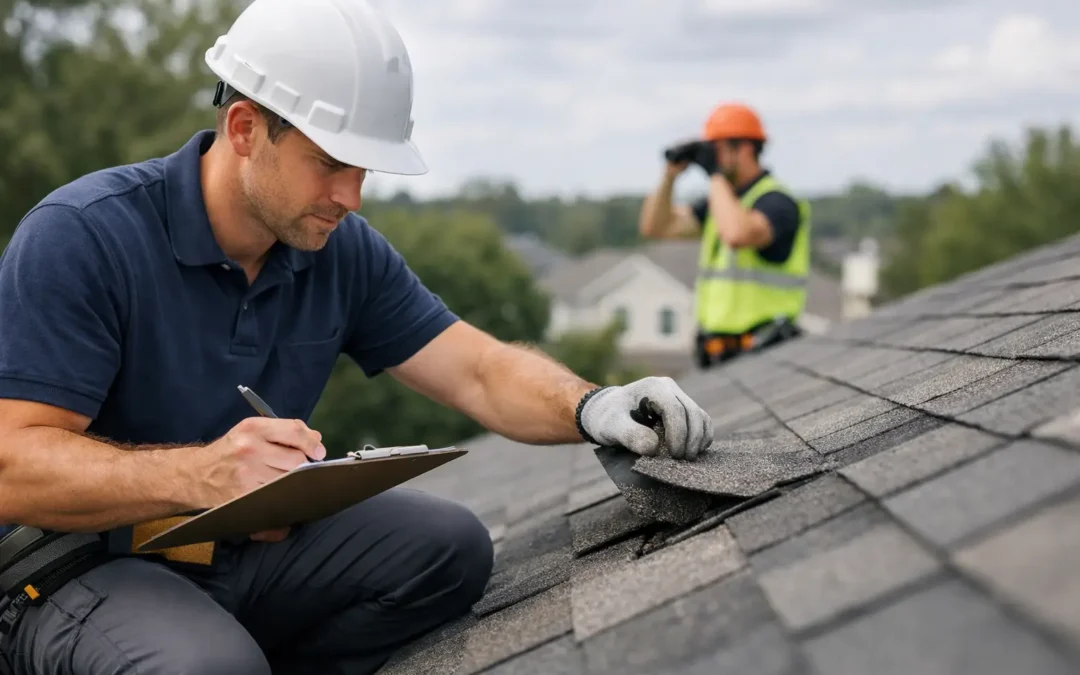
The condition beneath the roofing material matters as much as what is visible from the ground. Water can travel along underlayment, decking, framing, or electrical penetrations before it reaches a ceiling. That is why the source of a leak and the location of the stain are not always the same. A thorough evaluation should examine the roofing surface, flashing, penetrations, drainage areas, attic conditions when accessible, and signs of hidden moisture.
When a Roof Repair Makes Sense
Roof repair is generally appropriate when the roof is relatively young, the damage has a clear cause, and matching materials are available. For example, a roof that performed well before a recent wind event may only need targeted shingle replacement and properly sealed flashing. Addressing that damage promptly can keep a minor breach from becoming rot, mold growth, or interior water damage.
Repairs can also make sense for property owners preparing for a larger project in the near future. A well-executed repair can safely bridge the gap when a full replacement is already planned but not immediately necessary. The key is being honest about its purpose. A repair should provide dependable protection, not create the false expectation that an aging roof has been renewed.
A repair may be the right path when these conditions are present:
- Damage is confined to one small, identifiable area.
- The roof still has meaningful remaining service life.
- The deck and underlayment are dry and structurally sound.
- The repair can be completed with compatible materials and proper workmanship.
Even a small repair deserves careful attention in Northeast Florida. Wind-driven rain can force water beneath shingles and around roof penetrations that may look fine in dry weather. The repair must address the failed component, not merely cover the symptom with caulk or surface sealant.
Signs Replacement Is the Better Long-Term Decision
Every roof eventually reaches a point when repair costs no longer deliver dependable value. Age is one factor, but it is not the only one. Florida’s intense sun, heavy rainfall, humidity, salt air in coastal communities, and hurricane-season winds can accelerate wear differently from one home to another.
An older roof with one new leak is not automatically a replacement candidate. But an older roof with multiple leaks, widespread material loss, curling or cracking shingles, failing valleys, repeated storm repairs, or visible sagging should be evaluated as a complete system. Replacing the roof may cost more upfront, yet it can end the cycle of emergency calls and give you a consistent layer of protection across the entire home.
Replacement also allows a contractor to inspect and address hidden issues that may not be accessible during a limited repair. Damaged decking can be replaced, flashing details can be rebuilt, and the installation can be completed as an integrated roofing system using materials designed to work together. For homeowners planning to stay in their property, this can provide greater confidence before the next severe-weather season.
For commercial and multi-family properties, the decision often hinges on risk management. A small leak over one unit or suite can quickly affect tenants, operations, inventory, and common areas. When failures are becoming repetitive, a planned replacement may be more predictable and less disruptive than reacting to water intrusion one section at a time.
Consider Age, Materials, and Prior Repairs Together
Roof age provides useful context, but it should never be the only measure. Asphalt shingle roofs in Florida may weather faster than the same roof in a milder climate, while tile and metal systems have different maintenance needs and failure points. Installation quality, attic ventilation, tree coverage, storm exposure, and prior repairs all influence performance.
The repair history is especially revealing. One repair after a documented storm event is different from several repairs for unrelated leaks over a few years. Frequent repairs can indicate that materials are nearing the end of their useful life or that a prior installation has vulnerable details. Keep records of leak locations, repair dates, and storm-related damage. This information helps identify patterns that may not be obvious during a single inspection.
Material availability should also factor into the decision. If an exact match is no longer manufactured, a repair can still protect the roof, but the finished appearance may vary. That may be acceptable for a discreet area. On a highly visible slope or a roof with broad fading and wear, replacement may offer a more consistent result.
Do Not Let Storm Damage Wait
After a hurricane, tropical storm, or severe thunderstorm, obvious damage such as missing shingles and fallen branches deserves immediate attention. Less obvious issues matter too. Creased shingles, lifted edges, displaced flashing, cracked tiles, and impact marks can create entry points for water long after the skies clear.
If water is entering the home, emergency tarping can reduce additional damage while a permanent repair plan is developed. Document visible conditions with photos if it is safe to do so, move belongings away from active leaks, and avoid climbing onto a wet or storm-damaged roof. A prompt professional assessment can help determine whether the damage is isolated, repairable, or extensive enough to support replacement.
Waiting often increases the final scope. Water that enters through a small opening can compromise wood decking and spread into walls or ceilings. What began as a focused roof repair can become a larger exterior and interior restoration project.
Compare Value, Not Just Today’s Price
The least expensive proposal is not always the least expensive outcome. When comparing repair and replacement estimates, ask what work is included, how the damaged area will be diagnosed, which materials will be used, and what workmanship and manufacturer warranty coverage applies. Clear scope matters because roofing protection depends on details such as flashing, underlayment, fasteners, ventilation, and cleanup, not simply the visible top layer.
A replacement estimate should also help you understand the full project plan: material options, deck repairs if needed, protection for landscaping and exterior surfaces, removal and disposal, installation timeline, and warranty options. Financing can make a necessary replacement more manageable, but the decision should still be grounded in the roof’s actual condition and the protection your home needs.
Stonebridge approaches this decision with a focus on honest recommendations, professional-grade materials, and durable workmanship for Florida conditions. Whether the answer is a targeted repair or a complete reroof, you deserve a clear explanation of why that scope is the responsible choice.
If you are seeing stains, missing materials, recurring leaks, or storm-related damage, schedule an inspection before the next heavy rain turns uncertainty into a larger repair. A well-timed decision can protect your family’s most valuable asset and restore the peace of mind that comes from knowing your roof is ready for what Florida weather brings.