
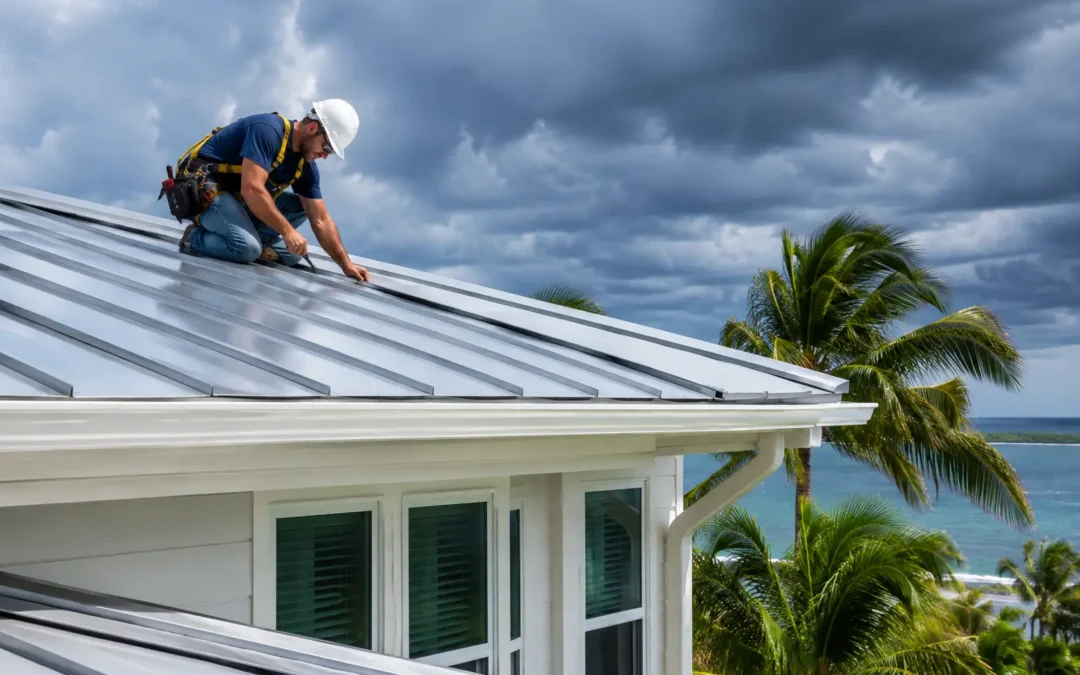
A hurricane does not need to tear off an entire roof to create a serious problem. One lifted shingle, cracked tile, loose flashing detail, or failed edge can give wind-driven rain a path into the roof system. For Northeast Florida property owners, learning how to hurricane proof roofs starts with treating the roof as a connected system, not just a surface of shingles or tiles.
A strong roof is built around secure connections: the covering to the deck, the deck to the framing, and the edges and penetrations that keep water out when wind pressure rises. The right improvements depend on your roof’s age, material, design, condition, and the current building requirements in your area. A professional inspection can identify where targeted repairs are enough and where replacement is the more responsible long-term decision.
Start With a Hurricane Roof Inspection
Do not wait for a named storm to inspect your roof. Florida heat, humidity, afternoon rain, and seasonal wind can slowly weaken materials long before hurricane season arrives. By the time a homeowner sees a ceiling stain or finds granules in a gutter, water may have already affected underlayment, decking, insulation, or framing.
A thorough inspection should look beyond the visible field of the roof. A qualified roofing professional will check shingles or tiles, ridge caps, valleys, pipe boots, flashing, roof-to-wall transitions, gutters, soffits, and the condition of exposed fasteners. They should also evaluate the attic when access allows. Dark staining, soft decking, damp insulation, or daylight around roof penetrations can reveal issues that are not obvious from the ground.
Pay close attention to roof age. An older roof may look acceptable from the driveway but have brittle shingles, weakened sealant strips, deteriorated underlayment, or corroded flashing. If a roof is near the end of its serviceable life, repeatedly patching it can cost more over time than planning a replacement designed for Florida weather.
How to Hurricane Proof Roofs at Their Weakest Points
Wind does not apply equal force across every part of a roof. Corners, rakes, ridges, eaves, and transitions often experience higher uplift pressure than the center of the roof. These areas deserve careful installation and regular maintenance.
Secure the roof deck and framing connections
The roof deck is the wood sheathing beneath the roofing material. If it is loose, damaged, or inadequately fastened, even high-quality shingles or tiles cannot perform as intended. During a reroof, contractors can assess the deck, replace compromised sections, and improve deck attachment where appropriate.
In some homes, strengthening the connection between the roof structure and exterior walls may also be worth discussing. This work is not identical for every house, and it can involve access limitations, roof design, and local code requirements. The key is to have a contractor explain what is practical for your specific structure rather than selling a one-size-fits-all upgrade.
Choose a water-resistant underlayment system
The roof covering is the first line of defense, but underlayment provides critical backup protection when shingles or tiles are damaged or displaced. A properly installed water-resistant underlayment helps limit water intrusion at vulnerable areas such as valleys, eaves, penetrations, and roof transitions.
Material selection matters, but installation matters just as much. Underlayment must be correctly overlapped, sealed, and integrated with flashings. Shortcuts that are hidden beneath the finished roof may not become visible until the next major storm, when repairs are more disruptive and expensive.
Reinforce edges, flashing, and penetrations
Roof edges can be especially vulnerable in high winds. Properly installed metal edge components help protect the perimeter and reduce the chance that wind gets beneath the roofing material. Loose fascia, damaged soffits, and clogged gutters can also contribute to water problems around the roofline.
Flashing deserves the same attention. Chimneys, walls, vents, skylights, plumbing stacks, and valleys interrupt the roof surface. Each interruption is a potential leak point if flashing is bent, corroded, poorly sealed, or incorrectly integrated with the surrounding materials. Replacing a cracked pipe boot or resealing a failing flashing detail early is far less costly than repairing interior water damage later.
Use wind-rated roofing materials installed to specification
Whether your property has asphalt shingles, concrete or clay tile, metal, or a low-slope commercial roof system, ask about products and installation methods appropriate for your location and roof design. Established manufacturers publish installation requirements and wind-resistance information for their products. Those requirements are not suggestions. They affect performance, warranty coverage, and the roof’s ability to resist uplift.
For shingle roofs, correct starter strips, nail placement, nail quantity, sealing, and ridge cap installation are essential. For tile roofs, the attachment method and condition of individual tiles are especially important. Broken, slipped, or loose tiles should be addressed promptly, not saved for a future project. On commercial and multifamily properties, seams, drains, edge metal, and rooftop penetrations require a maintenance plan tailored to the roofing system.
Keep Water Moving Off the Roof
A hurricane-ready roof must manage water as well as wind. Florida storms can drop intense rainfall in a short period, and water that cannot drain properly can back up under roofing materials or overflow into soffit and wall areas.
Keep gutters and downspouts clear of leaves, pine needles, and roof debris. Make sure downspouts direct water away from the foundation and do not discharge onto lower roof sections where runoff can overwhelm the system. Trim tree limbs that rub against the roof or hang close enough to fall during a storm. A branch may puncture a roof covering, but constant friction can also wear away protective granules and damage tiles over time.
Drainage improvements are not a substitute for a sound roof. Clean gutters cannot compensate for failed flashing or aging underlayment. They are one part of routine maintenance that protects the larger system.
Know When Repair Is Enough and When Replacement Is Safer
A focused repair can be the right answer after a small leak, missing shingles, lifted flashing, or isolated storm damage. It is often the most sensible option when the roof is relatively new and the issue is limited. The repair should match the existing system and address the cause of the failure, not merely cover the visible symptom.
Replacement becomes a stronger consideration when damage is widespread, multiple repairs have accumulated, materials are nearing the end of their life, or the deck and underlayment need attention. A planned reroof also gives homeowners the opportunity to improve vulnerable details that may be inaccessible during a small repair.
Be cautious of storm-chasing contractors who promise immediate answers without a complete inspection. A trustworthy contractor should document conditions, explain the scope of work, identify material options, and provide a clear estimate. Credentials, local experience, manufacturer training, workmanship standards, and warranty options all matter when your roof is protecting your family’s most valuable asset.
Prepare Before Hurricane Season Arrives
The best time to schedule roofing work is before forecasts become urgent and local contractors are responding to widespread storm damage. Keep copies of roof warranties, invoices, inspection notes, and before-and-after project photos in a safe place. After a storm, photographs from the ground can help document visible conditions, but homeowners should not climb onto a wet or damaged roof.
If you notice active leaking, fallen debris, missing materials, or exposed decking after a storm, seek professional help quickly. Emergency tarping can limit further water intrusion while a repair plan is developed. It is a temporary protective measure, not a replacement for correcting the underlying damage.
For Jacksonville-area homes and properties across Northeast Florida, Stonebridge approaches storm readiness with the same principle that guides every roofing project: durable workmanship at the details is what protects the whole structure. A timely inspection and an honest conversation about your roof’s condition can provide far more peace of mind than waiting for the first tropical forecast.