
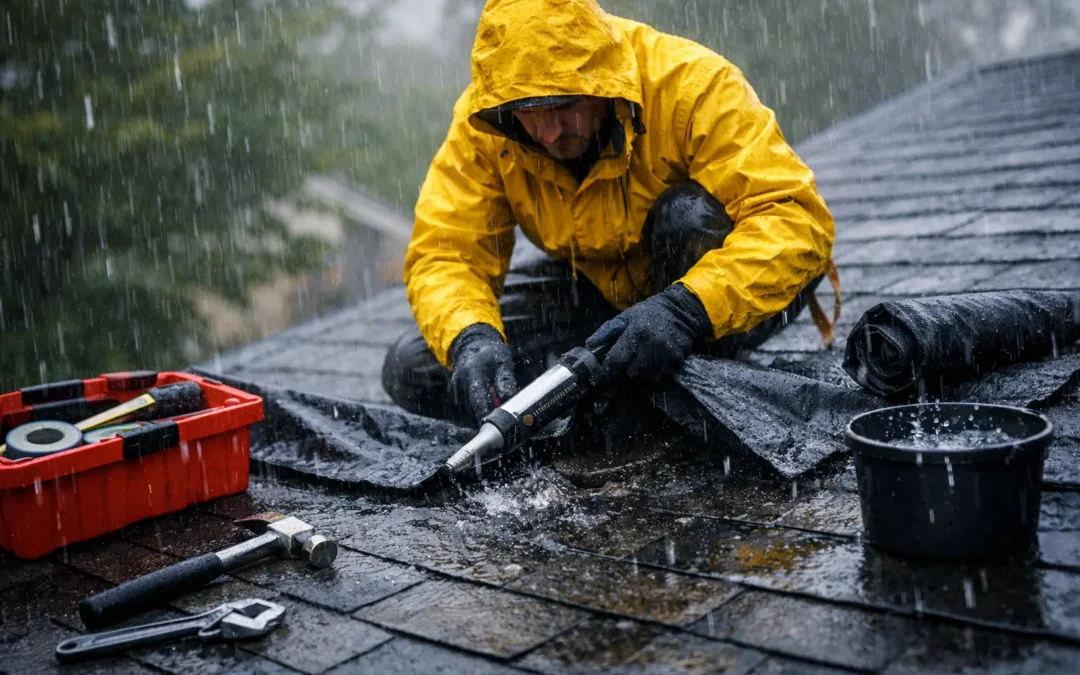
A drip in the middle of a Florida downpour can turn from a nuisance into stained drywall, wet insulation, and a damaged ceiling in a matter of hours. Roof leak repair during rain requires a careful response: protect the inside of the property first, avoid unsafe roof work, and get a qualified roofer involved as soon as conditions allow.
In Jacksonville and across Northeast Florida, wind-driven rain can force water beneath lifted shingles, cracked tiles, failing flashing, or aging roof penetrations. The water spot you see indoors may be several feet away from the actual entry point, which is why a fast, thoughtful response matters more than a rushed guess.
Can Roof Leak Repair During Rain Be Done Safely?
Sometimes, but the scope of the work matters. A professional may be able to perform an emergency inspection from the ground, attic, or accessible interior areas while it is raining. Active rainfall can also help identify where water is entering. However, climbing onto a wet roof is dangerous, especially during lightning, high winds, or tropical weather.
Permanent repairs generally need dry enough conditions for materials to bond, seal, and perform as designed. Roofing cement, flashing sealants, underlayment, and replacement shingles or tiles should not be installed carelessly on a soaked surface. A repair that appears to stop the leak for one afternoon may fail quickly if it was not completed under suitable conditions.
For that reason, emergency roof leak repair during rain often means stopping or redirecting water temporarily, protecting the home, and scheduling the lasting repair as soon as the roof can be safely accessed. In serious cases, a professional roof tarp can provide important short-term protection between storms.
What to Do When Water Starts Coming Through the Ceiling
Your first job is to limit interior damage without putting anyone at risk. Move furniture, electronics, rugs, and other valuables away from the affected area. Place a bucket, storage bin, or other stable container under the drip, then line the surrounding floor with towels or plastic sheeting to catch splashes.
If water is pooling in a ceiling area, do not ignore it. A sagging ceiling can become heavy enough to collapse. Keep people and pets out from beneath the bulge. If it can be done safely, a small controlled opening at the lowest point of the bulge may allow water to drain into a container rather than spreading across a larger portion of the ceiling. If you are unsure, wait for emergency help rather than working near compromised drywall.
Take photos and short videos before moving damaged items or making temporary changes. Documentation can help a roofing professional understand the pattern of the leak and may be useful if you need to file an insurance claim after storm damage.
There are four immediate safety concerns that deserve special attention:
- Stay away from light fixtures, outlets, ceiling fans, and electrical panels near the leak. Turn off power to the affected area only if you can do so safely from a dry location.
- Do not climb onto the roof during rain, wind, lightning, or poor visibility. A fall can turn a property emergency into a personal emergency.
- Do not place a ladder on wet, unstable, or muddy ground to inspect eaves or gutters.
- If the leak is substantial, the ceiling is sagging, or water is entering near electrical equipment, contact an emergency roofing professional promptly.
Why a Leak May Appear During a Heavy Rainstorm
Not every roof leak means the entire roof has failed. A single damaged component can allow water inside, particularly when rain is driven sideways by strong winds. In Florida, common trouble spots include missing or cracked shingles, loose ridge caps, broken or slipped tiles, deteriorated pipe boots, damaged flashing around chimneys or walls, and openings near skylights, vents, or attic fans.
Clogged gutters can also contribute to water problems, though they are not always the root cause. When gutters overflow, water can back up near the roof edge, soak fascia materials, or find weak points around the eaves. On low-slope commercial roofs, ponding water and compromised seams can create a different set of leak risks.
Age is another factor. Roof materials are exposed to intense sun, humidity, sudden downpours, and hurricane-season winds year after year. A roof that looked acceptable in dry weather may reveal weak seals or weathered materials only when a hard rain tests every vulnerable detail.
Avoid the Temptation to Make a Quick Roof Patch
It is understandable to want the drip stopped immediately. Still, some common do-it-yourself fixes create bigger problems. Smearing caulk around a suspected area from a ladder, fastening a tarp directly through shingles, or covering a wet roof with plastic can damage materials and make professional repairs more difficult.
A tarp is useful when it is installed correctly, but it is not simply a sheet thrown over a roof. It must be positioned to shed water, secured without creating unnecessary punctures, and extended beyond the damaged area. Improper tarping can trap water, tear loose in wind, or redirect runoff into another vulnerable location.
A temporary interior collection system is often the safer choice while rain is still falling. Once weather clears, a trained roofing team can inspect the roof surface, attic, flashing details, and drainage paths to identify the true source of the problem.
What a Professional Emergency Roof Inspection Should Include
A quality inspection does more than identify the closest visible defect. The roofer should assess the roof covering, penetrations, flashing, valleys, ridge areas, roof-to-wall transitions, and drainage components. For a leak that appears indoors, attic inspection can reveal wet decking, damp insulation, mold-prone areas, or the path water took before reaching the ceiling.
The right solution depends on the roof system and the extent of the damage. A localized flashing repair or pipe boot replacement may be enough for a newer roof in otherwise sound condition. Repeated leaks, widespread shingle deterioration, storm-related wind damage, or soft roof decking can point to a larger repair or replacement need.
This is where clear communication matters. A trustworthy contractor should explain what is temporary, what is permanent, and why a specific repair is recommended. Homeowners should not be pressured into a full replacement when a repair will responsibly protect the property. At the same time, patching an aging roof repeatedly can become more expensive than addressing the underlying condition.
After the Rain Stops, Do Not Assume the Problem Is Over
A ceiling may stop dripping before the roof has dried or before trapped moisture has been discovered. Check the attic, if it is safely accessible, for wet insulation, darkened wood, or moisture around vents and penetrations. Pay attention to musty odors and new stains over the following days.
Dry affected interior areas quickly. Fans and dehumidification can help with minor moisture exposure, while extensive saturation may require water-mitigation support. Wet insulation and drywall can hold moisture long after a storm, creating conditions that encourage mold growth and compromise materials.
If storm damage is suspected, save photos, note the date and time of the event, and keep records of emergency services and repairs. Do not wait through multiple storms to schedule an evaluation. A small entry point can enlarge with each cycle of rain and wind.
Choose a Roofer Ready for Florida Weather
Emergency service should be responsive, but it should also be accountable. Look for a local contractor with proper licensing, insurance, manufacturer-backed experience, and a clear process for inspecting storm damage and performing durable repairs. The best repair is not just the one that stops today’s drip. It is one that protects the roof system through the next hard rain.
Stonebridge brings a craftsmanship-driven approach to roof repair, storm response, roof tarping, and full roof replacement for Jacksonville-area property owners. Its GAF Master Elite® certification reflects advanced training and a commitment to professional-grade installation practices built for Florida conditions.
When the rain is falling, focus on safety, containment, and documentation. Once conditions are safe, a prompt professional assessment can turn an unsettling leak into a clear plan for protecting your home, business, and peace of mind.