
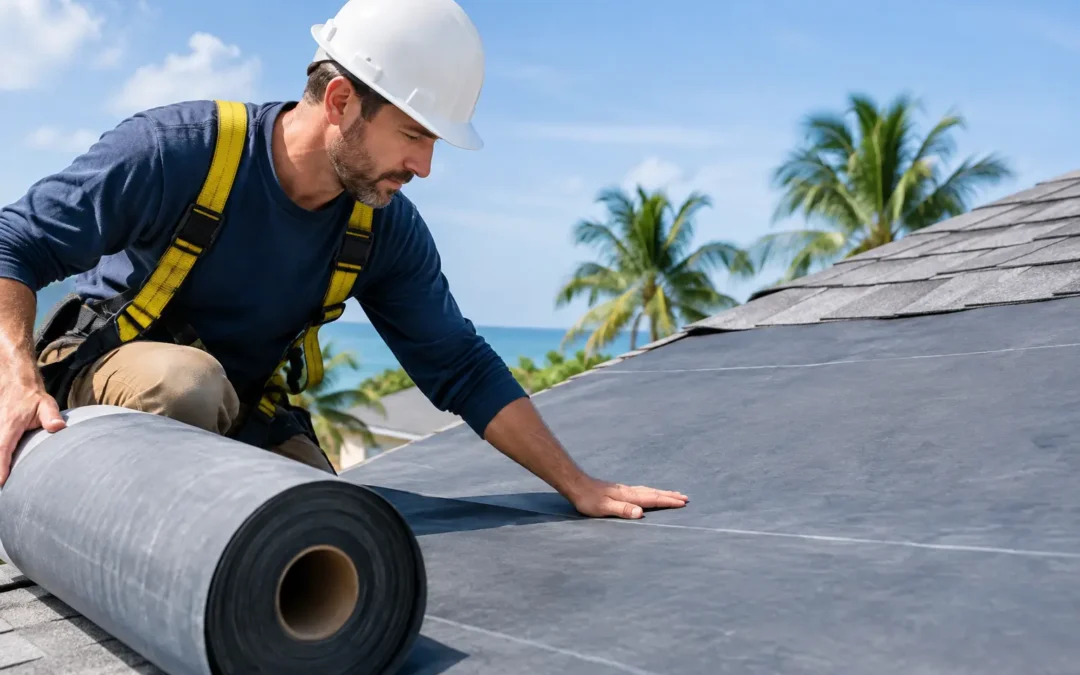
A roof can look perfectly sound from the street and still be vulnerable beneath its surface. The underlayment is the protective layer installed between the roof deck and the finished roofing material, and it plays a critical role when wind-driven rain gets past shingles, tiles, or metal panels. Knowing how to choose roof underlayment means looking beyond the lowest bid and selecting a system built for Northeast Florida heat, heavy rain, humidity, and storm conditions.
For Jacksonville-area homeowners and property owners, the right choice depends on the roof covering, slope, deck condition, local code requirements, and the installation details that keep water moving where it belongs. Underlayment is not the visible part of your new roof, but it is one of the layers that determines whether the system provides lasting peace of mind.
Start With Your Roof Type and Roof Slope
Underlayment should never be selected as a one-size-fits-all product. Asphalt shingles, concrete or clay tile, metal roofing, and low-slope commercial systems all have different installation requirements. The finished roof material, its fastening method, and the way it sheds water affect which underlayment is appropriate.
A typical asphalt shingle roof may use a high-quality synthetic underlayment across the field of the roof, along with self-adhered protection at vulnerable areas such as eaves, valleys, walls, and penetrations. Tile roofs often require more specialized assemblies because tiles can allow more water beneath the surface during wind-driven storms. Metal roofing may call for an underlayment designed to perform beneath metal panels and tolerate the temperatures that can build up under that material.
Slope matters just as much. Steeper roofs shed water quickly, while lower slopes hold water longer and demand more careful attention to laps, flashing, and material compatibility. A professional roofing inspection should identify the slope of each roof section, not just the main plane. Dormers, porch roofs, transitions, and additions often have different slopes and may need a different approach.
Compare the Main Roof Underlayment Options
Most residential reroofing projects involve one of three broad categories: asphalt-saturated felt, synthetic underlayment, and self-adhered membrane. Each can have a place, but the right answer depends on the complete roofing system rather than a single product label.
Asphalt-saturated felt
Traditional felt underlayment has been used for generations. It can be an appropriate option for certain applications when installed correctly and kept dry during the work process. However, it is generally heavier, less resistant to tearing, and more prone to wrinkling when exposed to moisture than many modern alternatives.
For a homeowner comparing estimates, felt may appear to reduce the initial price. That does not automatically make it a poor choice, but it should prompt a conversation about the roof system, the manufacturer requirements, and the level of weather protection the contractor is providing. In Florida’s wet, humid climate, handling and installation quality are especially important.
Synthetic underlayment
Synthetic underlayment is commonly chosen for modern shingle and many other steep-slope roof systems. It is typically lighter than felt, more tear-resistant, and easier for crews to install securely across the deck. Quality synthetic products can also offer better resistance to moisture exposure during construction.
That said, not every synthetic product performs the same way. Thickness, surface traction, fastening requirements, temperature tolerance, and manufacturer approvals vary. A contractor should be able to explain the specific underlayment being proposed, why it matches your roof covering, and how it fits within the manufacturer-approved system.
Self-adhered membrane
Self-adhered underlayment adheres directly to the roof deck and creates a highly water-resistant layer at critical locations. It is commonly used in valleys, around chimneys, skylights, walls, roof penetrations, and other areas where water concentrates or changes direction. Depending on the roof design and product requirements, it may also be used over larger portions of the deck.
This material can add meaningful protection, particularly on roofs exposed to heavy rain and wind-driven weather. It also costs more than standard underlayment and requires a clean, properly prepared deck for reliable adhesion. The goal is not to apply the most expensive membrane everywhere without a plan. The goal is to use the right protection in the places where the roof is most likely to be tested.
Focus on Florida Weather, Not Just the Material Price
Florida roofs handle a demanding combination of intense sun, sudden downpours, high humidity, and hurricane-season winds. Underlayment helps manage water that gets beneath the primary roof covering, but it must be part of a complete system that includes sound decking, properly installed flashing, approved fasteners, and effective ventilation.
Wind-driven rain is one of the most important considerations. Rain does not always fall straight down during a storm. It can be pushed beneath tile edges, shingle courses, ridge details, and flashing transitions. A properly selected and installed underlayment adds a second line of defense while the visible roofing material sheds the bulk of the water.
Heat also deserves attention. Roof assemblies in Jacksonville, St. Augustine, Ponte Vedra, Fernandina Beach, Green Cove Springs, Palm Coast, Orlando, Tampa, and Lakeland can experience prolonged high temperatures. Underlayment should be compatible with the roof covering above it and suited to the temperature conditions expected beneath that material. This is particularly relevant when choosing systems for metal or tile roofs.
Ask What Happens at the Details
The most costly roof leaks often begin at transitions rather than in the middle of an open roof field. When reviewing a roofing proposal, ask how the contractor will protect valleys, pipe boots, chimneys, skylights, sidewalls, headwalls, roof-to-wall transitions, and areas around vents.
A strong proposal should also address damaged decking if it is discovered after tear-off. Underlayment cannot correct soft, rotted, or delaminated wood. It needs a stable deck beneath it so fasteners hold properly and the material lays flat without gaps or weak spots.
Pay attention to overlaps and fastening methods as well. Underlayment is designed to shed water in a specific direction. If laps are too narrow, fasteners are misplaced, or edges are not properly secured, the system may not perform as intended when storms arrive. These details are difficult to evaluate after the final roof is installed, which is why contractor experience and accountability matter.
Make Sure the Underlayment Supports Your Warranty
A roof warranty is only as useful as the system and installation behind it. Many leading manufacturers specify approved underlayment products and installation methods for their roofing systems. Choosing compatible components can help protect warranty eligibility and reduce uncertainty if an issue arises later.
Before signing a contract, ask whether the proposed underlayment is approved for the exact shingle, tile, or metal product being installed. Ask which warranty is included, what registration is required, and whether the contractor’s credentials provide access to enhanced manufacturer coverage.
Stonebridge’s GAF Master Elite® certification reflects ongoing technical training and access to enhanced warranty options for qualifying GAF roofing systems. For homeowners, that type of credential is valuable because it connects workmanship, materials, and manufacturer requirements instead of treating the roof as a collection of unrelated products.
Compare Estimates by Scope, Not by Bottom-Line Price
Two roof replacement estimates can look similar while including very different levels of underlayment protection. One may list only a generic underlayment allowance, while another identifies the product type, deck preparation, self-adhered membrane locations, flashing work, and replacement of deteriorated wood if needed.
Request clear answers before comparing prices. You should know the brand and type of underlayment, where self-adhered protection will be installed, whether the materials are compatible with your finished roof covering, and how the crew will protect your home if weather interrupts the project.
Low pricing can be attractive, especially after an unexpected leak or storm event. But a roof is your home’s primary barrier against the elements. Saving a small amount on the layer beneath the roof covering may not be worthwhile if it compromises material quality, installation practices, or warranty protection.
Choose the Contractor Along With the Material
Even the best underlayment cannot perform properly if it is installed over a compromised deck or handled carelessly. Select a licensed, insured contractor with a track record in Florida roofing, clear written scopes of work, manufacturer-backed credentials, and a process for communicating what they find during the project.
A dependable contractor will not pressure you toward a material without explaining the reason. They will assess your roof’s design, discuss the trade-offs, and recommend an assembly that fits your property, budget, and long-term goals. If your roof has a leak, missing materials, storm damage, or signs of age, a professional estimate can turn uncertainty into a practical plan for protecting your most valuable asset.