Reroofing Versus Roof Coating for Florida Homes
A roof can look tired long before it has reached the end of its useful life. But in Northeast Florida, appearance is rarely the deciding factor. Relentless UV exposure, heavy rain, humidity, salt air near the coast, and hurricane-force winds can turn a small weakness into a damaging leak quickly. When weighing reroofing versus roof coating, the right answer depends on your roof type, its condition, and whether the existing system can still reliably protect the structure beneath it.
For many homeowners, a roof coating is not a substitute for reroofing. For many commercial properties with low-slope roofing, however, a properly specified coating system can be a smart way to extend service life. The key is an honest inspection before choosing the lower upfront price.
What Reroofing Actually Means
Reroofing generally means installing a new layer of roofing material over an existing roof, rather than removing every layer down to the roof deck. People often use the term interchangeably with roof replacement, but they are not always the same project.
A full roof replacement involves tearing off old shingles, tile, or other roofing materials so the contractor can inspect the decking and replace damaged components. New underlayment, flashing, ventilation details, and roofing materials are then installed as a complete system. This is often the better path when a roof is aging, storm-damaged, leaking in multiple areas, or already has more than one layer of roofing.
A reroof may be possible when the existing roof has only one layer, the deck is sound, and there are no widespread moisture concerns. Florida building requirements, roof slope, material type, and local permitting rules can all affect whether an overlay is allowed. A qualified contractor should verify those details rather than treating reroofing as an automatic shortcut.
For shingle roofs on Jacksonville-area homes, the conversation often leads to a full replacement because the roof system needs more than fresh shingles. Underlayment, flashing around penetrations, and deck condition matter just as much when storms arrive.
What a Roof Coating Can and Cannot Do
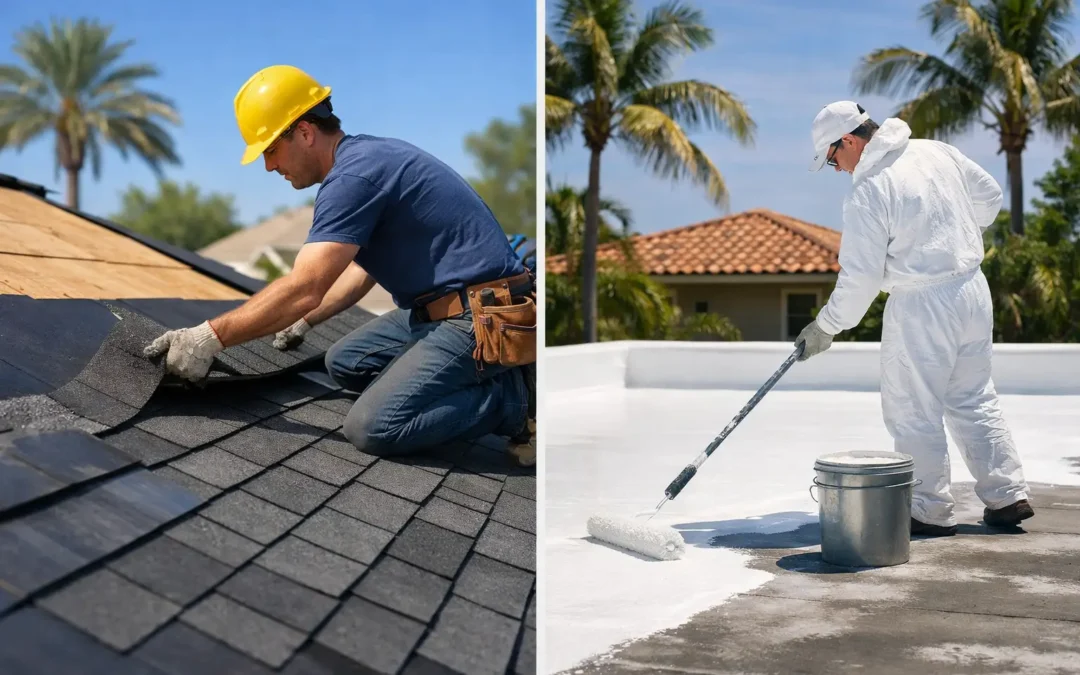
Roof coatings are liquid-applied membranes that cure into a protective layer over an existing roof surface. They are most common on low-slope commercial roofs, including modified bitumen, metal, single-ply, and certain built-up roofing systems. Depending on the product and roof assembly, coatings may help reduce surface temperatures, seal minor weathering, and add years of service life.
A coating is not a cosmetic paint job. The roof must be cleaned, dried, repaired, and prepared correctly. Seams, penetrations, drains, flashing transitions, and existing cracks typically require detailed repair before the coating is applied. If moisture is trapped beneath the existing membrane, coating over it can conceal an active problem instead of solving it.
Roof coatings are also not usually the right fix for a conventional asphalt shingle roof. Shingles are designed to shed water through overlapping layers, and coating them can interfere with their intended performance, affect manufacturer coverage, or hide damage that needs real repair. A homeowner with worn, curling, missing, or storm-lifted shingles should not assume a coating can restore the roof.
Reroofing Versus Roof Coating: The Real Differences
The choice is not simply between an expensive option and an affordable one. Each approach addresses a different level of risk.
Upfront cost and long-term value
A roof coating commonly costs less upfront than a replacement because it uses less material and avoids a full tear-off. That can make it appealing for a commercial owner managing a large low-slope roof or planning capital improvements over several years.
Yet lower initial cost does not always mean lower ownership cost. Coatings need periodic inspection and eventual recoating. If the roof has saturated insulation, failing seams, poor drainage, or structural concerns, money spent on a coating may only delay a necessary replacement. A full reroof or replacement costs more at the start but can provide a new, integrated roofing system with stronger long-term protection and available manufacturer warranty options.
Leak protection
A coating can be highly effective when the existing low-slope roof is fundamentally sound and leaks are limited to repairable seams, penetrations, or surface deterioration. It creates a continuous barrier across the roof surface, which can be useful on roofs with many details.
Reroofing or replacement is the stronger solution when leaks are widespread, recurring, or tied to failed underlayment, damaged decking, or aged materials. Water does not always enter where it becomes visible inside. If a ceiling stain keeps returning after spot repairs, the issue may be below the roof surface and require a closer look.
Wind and storm readiness
Florida storms test the entire roof assembly, not just its top layer. Wind can exploit loose shingles, compromised flashing, worn sealant, and weak attachment points. A coating may improve the weathering surface of an appropriate commercial roof, but it cannot correct poor installation, rotten decking, or inadequate wind resistance beneath the membrane.
A professionally planned replacement allows critical components to be evaluated together. That includes deck repairs, underlayment selection, flashing installation, ventilation, and the fastening requirements appropriate to the roof system. For a home exposed to coastal wind and driving rain, that whole-system approach brings meaningful peace of mind.
Energy performance
Reflective roof coatings can reduce heat absorption on suitable low-slope roofs. That can make interior spaces more comfortable and may lessen cooling demand, particularly for commercial buildings with broad roof areas.
A new roof can also support energy goals, but the strategy is different. It may include improved ventilation, better attic insulation planning, highly reflective materials where appropriate, or an integrated solar roofing upgrade. Energy savings should be considered alongside water protection, wind performance, and the remaining condition of the existing roof.
When a Roof Coating May Be the Right Choice
A roof coating may be worth considering when a commercial or low-slope roof is structurally sound, reasonably dry, and nearing the point where surface weathering needs attention. It can be particularly practical when the roof has no major ponding-water issues, insulation remains dry, and repairs to seams and flashing are manageable.
Before moving forward, the roof should be inspected for trapped moisture and weak areas. On larger commercial roofs, that may involve moisture scanning or test cuts in addition to a visual review. The coating material must also be compatible with the existing roof substrate. Applying the wrong product, or applying a quality product over poor preparation, can lead to adhesion failure and disappointing results.
When Reroofing or Replacement Is the Better Investment
Reroofing or full replacement is usually the wiser decision if the roof has extensive leaks, visible deterioration, storm damage, soft decking, multiple existing layers, or a history of repeated repairs. It is also the better path when the current roof is near the end of its expected lifespan and you want dependable protection through future storm seasons.
For residential roofs, replacement is often more practical than trying to extend a failing shingle system. It gives the contractor access to the roof deck and creates an opportunity to build a complete system using quality components from established manufacturers. That matters when your roof protects your family, belongings, and one of your most valuable assets.
Property owners considering solar should be especially careful about timing. Installing a solar system on a roof that will soon need replacement creates unnecessary future work and expense. If the roof is already aging, replacing it first or choosing an integrated roofing-and-solar plan can be the more durable decision.
Questions to Ask Before You Choose
The best estimate should do more than provide a price. Ask whether the roof deck is sound, whether there is evidence of trapped moisture, and whether repairs have addressed the actual source of past leaks. For coatings, ask about surface preparation, material compatibility, thickness, drainage, maintenance expectations, and warranty terms.
For reroofing or replacement, ask whether the proposal includes tear-off, decking allowances, underlayment, flashing, ventilation, permit requirements, cleanup, and manufacturer-backed warranty options. A clear scope helps you compare proposals fairly and avoid surprises once the work begins.
Stonebridge approaches these decisions with the understanding that Florida roofs do not get second chances during a major storm. A careful inspection and a transparent recommendation should guide the project, whether that means targeted repairs, a coating system for an eligible low-slope roof, or a complete replacement.
The right roof decision is the one that addresses the condition you have now while preparing your property for the weather still ahead. Schedule an evaluation before the next leak, not after it has already reached the ceiling.